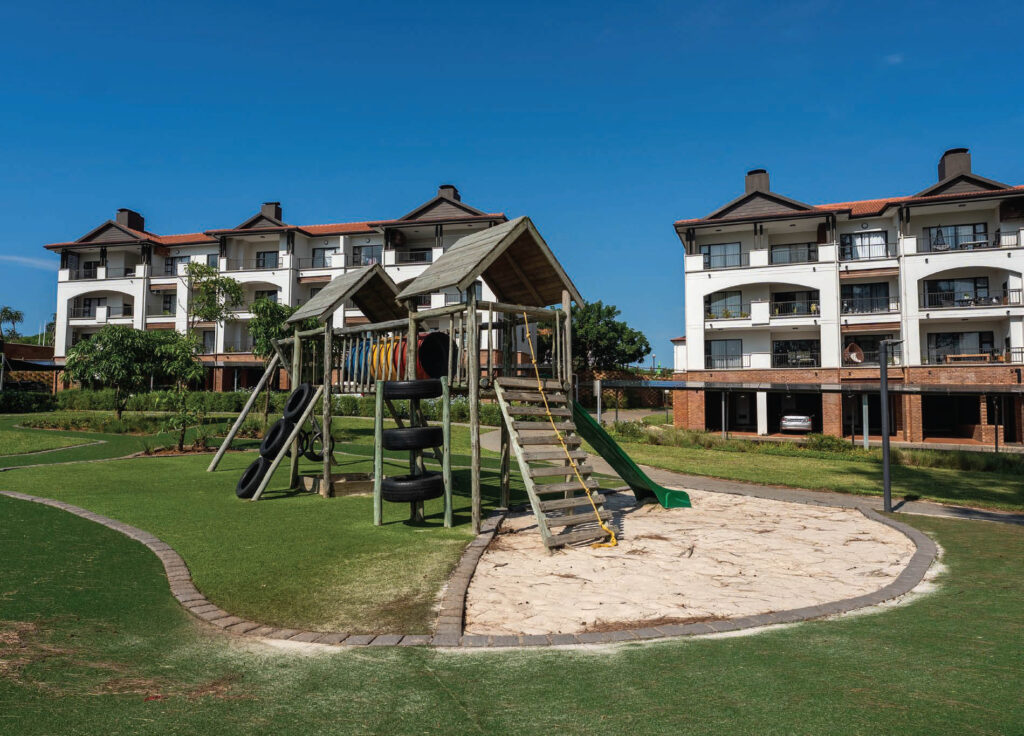
Smart Living
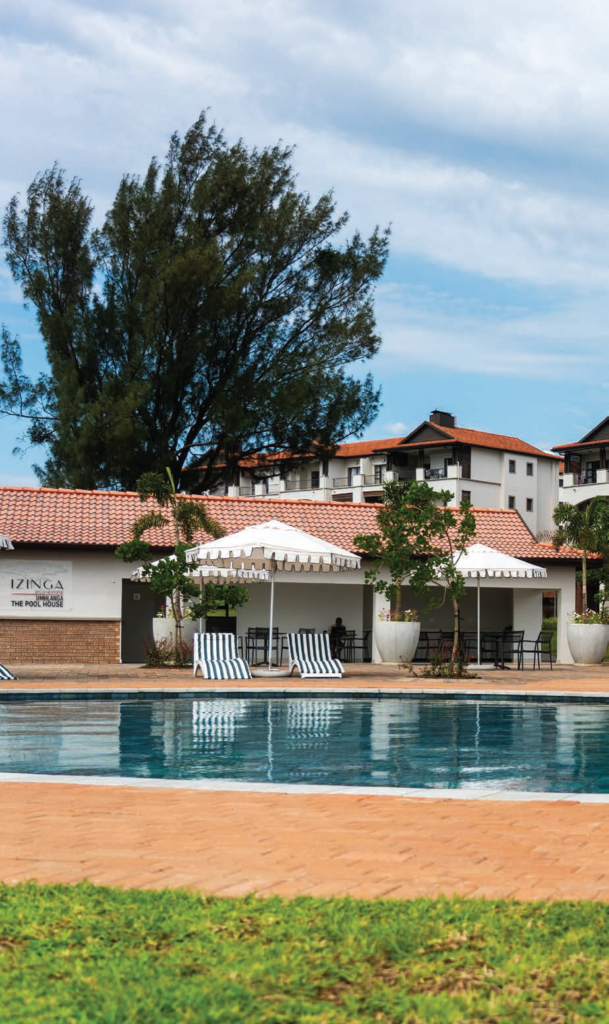
Just a stone’s throw from the uMhlanga Lagoon Nature Reserve in KwaZulu-Natal lies phase one of Balwin Properties’ recently completed Izinga Eco-Estate. The other phases are gradually taking shape.
The first 423 apartment units have recently achieved Final EDGE Advanced (Excellence in Design for Greater Efficiencies) certification by delivering 49% energy savings, 35% water savings and a 52% reduction in embodied energy in materials – well above the baseline requirements of 40%, 20% and 20% respectively.
Balwin Properties is no stranger to EDGE endorsements; in fact, it’s one of the biggest players in residential certifications. The portfolio consists of at least 27 000 apartments that have received EDGE preliminary certification and more than 10 000 apartments that have been awarded post-construction certification. This latest accolade does, however, mark a major milestone in resource-efficient residential developments.
Matthew Whalley, Director of Energy at Balwin, says key to their success is a holistic approach. So, how did they do it?
Energy
EDGE Advanced certification requires a minimum of 40% energy savings, and Izinga managed to achieve 49%. “It primarily comes down to the design – having the correct window-to-wall ratio (22.25%), as well as insulation and the spacing of the buildings,” says Whalley.
Along with that, the development boasts various energy-saving components that are increasingly becoming commonplace. These include energy-efficient refrigerators and washing machines, as well as energy-saving lightbulbs in internal spaces and common areas, which work with lighting controls.
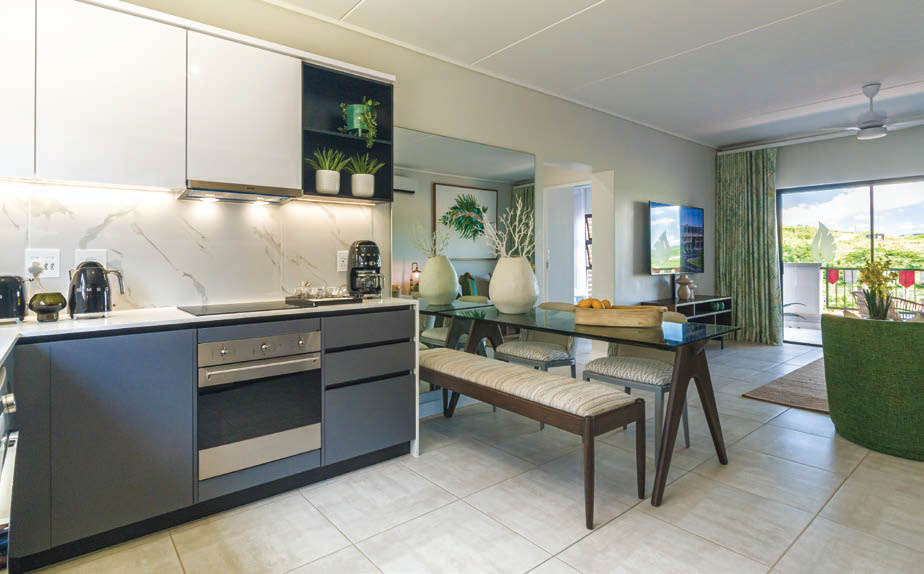
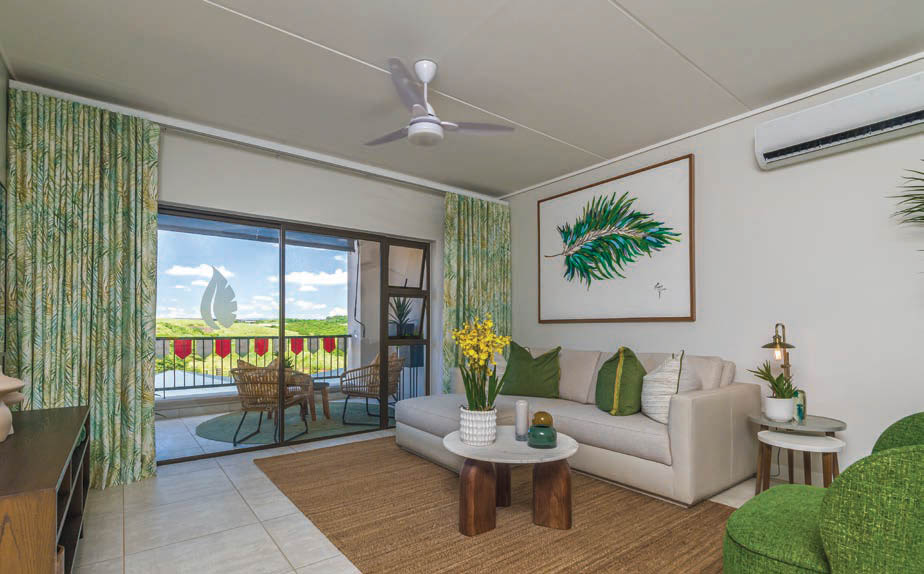
Whalley says the photovoltaic system was another driver in achieving these energy savings. The 375kW system contributes to 34.22% of the energy used by tenants. “It isn’t necessarily a saving on energy, but the embedded generation is a reduction of grid energy. That’s certainly what’s pushing us up to EDGE Advanced status rather than just EDGE,” he adds.

Balwin’s green Accredited Professional Lloyd Tinney reminds us that EDGE certification is location-specific, and is designed to account for different climates. Virtual energy was thus also taken into consideration throughout the development. It refers to the energy that the EDGE tool assumes will be used in development, and is specific to different regions. In KwaZulu-Natal, for instance, a factor taken into consideration is the high humidity.
Efficient ceiling fans and air-conditioning systems have been installed to increase comfort, preventing tenants from installing inefficient systems that would drive up energy usage.
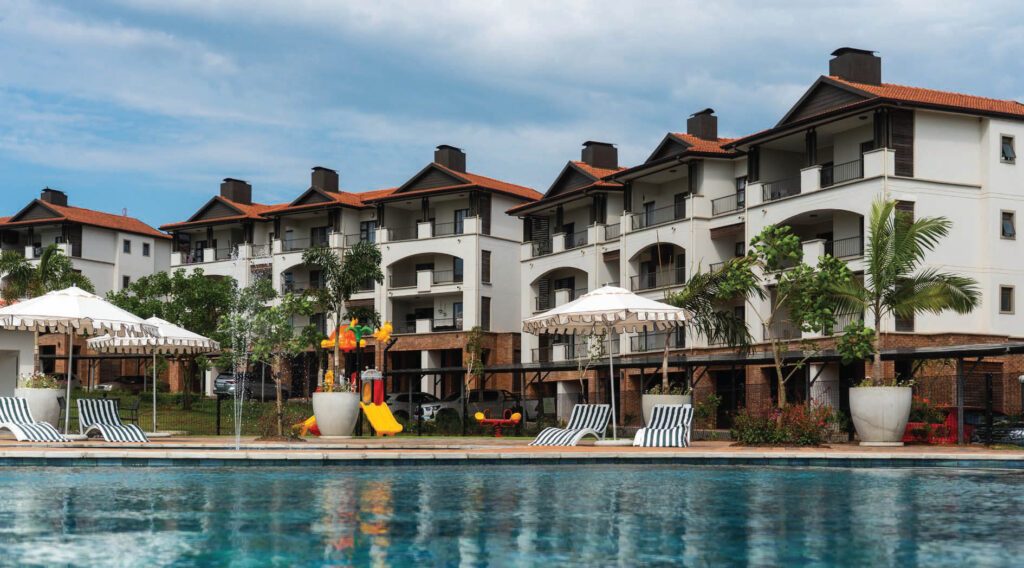
Water
Izinga Eco-Estate has surpassed the required water savings, achieving 35% through low-flow showerheads (5.7 litres per minute) and dual-flush toilets (6 litre high-level flush and 3 litre low-level flush) in all the bathrooms. Taps run at 4.9 litres per minute, while those in the kitchen go up to 7.05 litres per minute.
These low-flow taps also contribute to energy savings by reducing the amount of water that needs to be reheated and could be considered a passive element that helps residents save water, with minimal impact on the user experience. “Clients will use what you give them, so we have a responsibility as developers to provide them with a system that is efficient.”
In a province where sewer infrastructure to treatment plants and the capacity of treatment plants are a concern, they had to be cognisant of not adding pressure to the system, and this is where rolling out low-flow fittings really made a difference.
Materials
A low carbon footprint is the name of the game, and Balwin exceeded the minimum requirements by more than double, with a score of 52%.
From hollow-core slabs, cement bricks and ceramic tiles to aluminium window frames instead of steel, KwaZulu-Natal’s humidity was considered in making more sustainable choices. Tinney adds that using timber trusses and roof tiles is more efficient than the base case, which is a concrete in-situ reinforced conventional slab.
The materials used are also carefully considered to stand the test of time. “We have a responsibility to make sure that those homes and apartments are energy efficient and water efficient, and are built with just the right materials, because they are built to last forever – as long as you maintain them,” says Tinney. “You can make a bad decision now, and that will affect the next 100 years’ worth of efficiency, or you can make a good, responsible decision now, and it can pave the way for the right living environments for people.”
EDGE with purpose
Along with Green Building Council South Africa (GBCSA) and the International Finance Corporation (IFC), Balwin has helped transform large parts of the EDGE model to become a more effective and practical tool, specifically for large-scale residential projects.
The company is also working closely with the University of Cape Town to provide credible evidence that green-certified homes have lower utility costs, thereby reducing the cost of living. Their research (see +Impact issue 28) shows that annual savings can range from R1 888,00 to R8 214,00, depending on the size of a unit.
Whalley says there are three main reasons for pursuing these ratings: Firstly, to benefit the end-user. Secondly, the importance of third-party verification as credible proof of sustainability unlocks various third-party benefits. In the third place, it’s about moving the goalpost, because “being linked to certification keeps you aware of where you should be and allows you to keep exploring new technologies or new ways to improve buildings”.
Balwin is also partnering with the University of Cape Town to further the company’s understanding of what clients deem important when it comes to sustainability and green certification. The drive for sustainability in this specific market sector, according to Tinney, is the funding and financing of these developments. As a residential developer, Balwin does get sustainability funding, but not for the entire development. “The advantage on the finance side of things benefits the client, because the client’s buying the EDGE certificate or certified apartment, they’re getting the green bond and they’re getting the rebates paid out, so it’s more of a benefit that we’re passing on to a buyer.”
Although end-users seem more aware of the financial benefits of reduced interest rates and rebates, Tinney says the full financial picture, which includes significant water and electricity savings, still has a long way to go. At Balwin Properties, sales agents walk end-users through the advantages of investing in sustainable housing, and although that is a step in the right direction, Tinney believes much more needs to be done to start the conversation.
Nevertheless, the company remains focused on embedding sustainability principles in large-scale developments, be it apartments or lifestyle facilities. “The thing about building something that is sustainable,” adds Whalley, “is that it also has to be sustainable for the people living there, both in terms of comfort and in terms of financing.”
“A lot of the effort that’s gone into what Balwin has developed over the years, especially since we’ve embraced EDGE, is about how we can link these benefits that are making a better building to result in savings for clients, so that more people are able to afford to live in these kinds of estates.”