Shaping Africa’s Built Environment
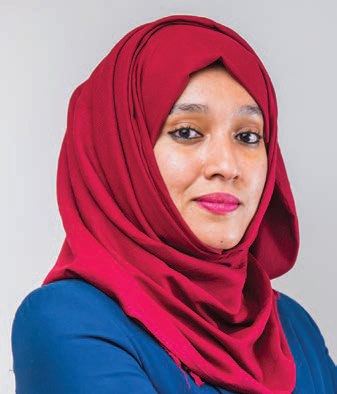
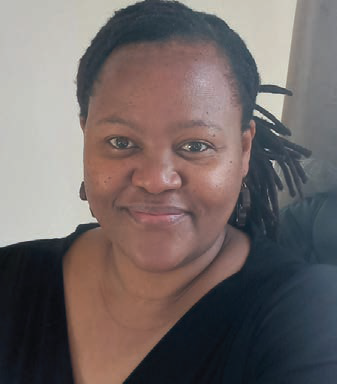
Nasra Nanda, CEO of the Kenya Green Building Society and Bakang Moeng, Manager: Public Sector Advocacy & Sustainability at GBCSA, share how women leaders are driving Africa’s sustainable building movement through advocacy, policy and inclusive leadership.
Chair of the World Green Building Council’s Africa Regional Network (ARN), Nasra Nanda, and Vice Chair Bakang Moeng are at the forefront of a continent-wide movement towards sustainable building. Leading a growing network of green building councils across Africa, they drive collaboration, strengthen member councils and champion regional priorities that support resilient, low-carbon built environments. Rooted in local realities while aligned with WorldGBC’s global strategy, their leadership is accelerating a bold transformation of how Africa builds for its future.
We chatted to them about their journeys into the green building space, the influence of women’s leadership in Africa’s construction sector and the resilience strategies that foster inclusive, sustainable cities.
Q: Your professional journeys began in different disciplines – law and architecture . How did those backgrounds influence the way you entered the green building space?
Nasra Nanda (NN): What attracted me to the green building movement was the opportunity to bring a different perspective to the conversation. Too often, sustainability is viewed through the narrow lens of individual buildings or imported solutions. Coming from a law, policy and governance background, I saw the built environment as something much bigger – a system that influences how people live, work, move, access services, build wealth and respond to climate change.
As a result, I entered the green building space less interested in buildings as isolated assets and more interested in how the built environment can serve as a platform for sustainable development. My perspective was further strengthened through my role as a city legislator in Nairobi. Working within local government exposed me to the realities of rapid urbanisation, housing deficits, infrastructure challenges, climate risks and the everyday decisions that shape how cities grow. This gave me clarity and the motivation to translate sustainability through a Global South lens. Africa’s challenges and opportunities are different, and our solutions must reflect our realities. For me, green buildings are not simply about environmental performance; they are about creating healthier, more resilient, inclusive and economically viable communities.
Bakang Moeng (BM): I started my career at an architectural firm specialising in luxury lodges in some of the world’s most remote locations. Designing in these environments required careful consideration of locally available materials, resource efficiency and environmental impact. At the same time, we had to ensure thermal comfort and reliable power supply, often far from conventional infrastructure. The challenge of creating high-quality spaces that responded to both human needs and environmental constraints sparked my interest in sustainable design. Those early experiences ultimately led me to pursue a career in green building and sustainability.
Q: How has being women influenced the way you engage with policymakers and stakeholders in Africa’s construction and property sectors?
NN: The construction and property sectors in Africa remain largely male-dominated, particularly at senior leadership and decision-making levels. Being a woman in these spaces has certainly required resilience, credibility and the confidence to occupy rooms where women are often underrepresented. At the same time, my experience as both a sustainability practitioner and a city legislator has shaped how I engage with policymakers and stakeholders. In legislative work, you quickly learn that sustainable development cannot be achieved through a single sector acting alone. It requires balancing competing interests, listening to diverse perspectives and building consensus around long-term outcomes.
I believe being a woman has influenced my leadership style in this regard. I tend to approach challenges through collaboration and coalition-building, connecting actors who do not always see themselves as part of the same conversation – government, developers, financiers, technical experts, communities and civil society.
BM: For the most part, I am guided by intuition and empathy. Working in policy and advocacy, particularly in the African context, requires a deep understanding of the challenges that people face every day. Interestingly, I have found it easier to navigate the sustainability, policy and advocacy space within the construction and property sectors than I did the architectural profession. This space has given me the flexibility to chart my own course, rather than trying to carve out a place in a profession that has traditionally been less accommodating to women. That experience has strengthened my commitment to inclusive and people-centred leadership.
Q: Centring women’s voices in the sustainable construction sector is a specific and intentional undertaking – what’s different about doing it in Africa?
NN: My experience both in the sustainability sector and as a city legislator has shown me that women often experience the built environment differently. Women interact daily with issues of housing, mobility, safety, security, access to services, public spaces, energy use and community resilience. These lived experiences provide valuable insights that are often missing from traditional planning and development processes.
What makes the African context particularly important is that we are building cities at a moment of immense transformation. The decisions we make today will shape how hundreds of millions of people live in the decades ahead. If women are not actively shaping those decisions, we risk designing solutions that overlook the realities of a significant portion of our population. For me, centring women’s voices is not simply a matter of equity – it is a matter of building better cities. The more diverse the voices, experiences, and opinions around the table, the more responsive, resilient and effective our solutions will be.
Q: What personal or professional resilience strategies have helped you thrive, and how do you see your presence reshaping representation for women in this space?
BM: Resilience is built through purpose and perspective. Working in sustainability can be challenging because the changes we advocate for often take time, requiring patience, persistence and the ability to navigate competing priorities. I stay grounded by focusing on the long-term impact of the work and celebrating incremental progress along the way.
I also believe representation matters. By being visible in leadership and advocacy spaces, I hope to demonstrate that there is no single path into the built environment. The more women see themselves reflected in these spaces, the more likely they are to pursue opportunities, challenge conventions and help shape a more inclusive and sustainable future.
Q: What is your most vivid memory affirming the value of the advocacy work you are currently doing?
NN: One of the moments that most affirmed the value of my work came during the devastating floods that affected Nairobi in 2024. As a city legislator, I found myself confronted not with a policy debate, but with an immediate humanitarian crisis. In Mathare, one of Nairobi’s most vulnerable informal settlements, thousands of residents were displaced as flood waters swept through homes and communities. Working alongside partners, including the Kenya Red Cross and community responders, we mobilised support for affected residents, including securing five rescue boats to assist evacuation and rescue efforts in some of the hardest-hit areas. What stayed with me was the scale of both the challenge and the resilience of the community. In Mathare alone, thousands of residents were displaced, while the floods claimed lives and affected tens of thousands of households across Kenya. In those moments, sustainability stopped being an abstract concept. It became about whether a mother could safely evacuate her children, whether a family had somewhere to sleep, and whether public institutions were prepared to respond when people needed them most.
The experience reinforced my conviction that climate change is not only an environmental issue – it is a governance, development and resilience issue. It strengthened my resolve to advocate for stronger climate action and urban resilience measures within Nairobi City County. Ultimately, this broader advocacy contributed to the passage and implementation of the Nairobi City County Climate Change Management Act, which established the legal framework for climate action, coordination and financing at the county level. For me, that journey – from responding to a flood emergency on the ground to helping strengthen the policy frameworks that can reduce future vulnerability – captures the true purpose of advocacy.
Q: How do you hope the next generation of women will expand the impact you’ve already begun?
BM: I hope the next generation of women enters the built environment with even greater confidence, ambition and influence than those who came before them. Our generation has worked to create opportunities and demonstrate that women belong in leadership, technical and policy roles across the sector. I hope they build on that foundation by bringing fresh ideas, challenging outdated norms and driving innovation at a scale we have not yet imagined.
Most importantly, I hope they recognise the value of their unique perspectives and use their voices to shape cities, policies and industries that are more inclusive, resilient and responsive to the needs of all people.
Q: Looking ahead, what is your vision for women’s leadership in Africa’s green building movement?
NN: For Africa to succeed, our sustainable future will not be built for women – it will be built with women helping shape the systems, cities and institutions that define the continent’s future.
BM: There is an African proverb that says, “If you educate a man, you educate an individual. But if you educate a woman, you educate a nation”. When women lead, sustainability becomes more than an environmental goal: it becomes a catalyst for healthier, more inclusive and more resilient communities across Africa.