Balancing people, finance and impact
Babalwa Tshandu, HR Manager, and Levinia Palmer, Chief Financial Officer and Executive Director, chatted to +Impact about the roles they play at Green Building Council South Africa, and their visions and perspectives as women in the green building space.
Q: Both of you work in roles that are often behind the scenes but are critical to success. How do HR and Finance intersect to support Green Building South Africa (GBCSA)’s mission?
Babalwa Tshandu (BT): HR and Finance are two sides of the same coin in delivering GBCSA’s mission: HR builds the human capacity and culture that enable our people to thrive, while Finance ensures the management of resources and the financial controls that sustain our impact.
Together, we play a critical role in managing risk and upholding compliance. Finance ensures strong financial governance and regulatory compliance, while HR focuses on people-related compliance and ethical practices. Through this partnership, we create policies that not only mitigate organisational risk but also promote fairness, integrity and accountability in how we engage with our people and stakeholders.
Levinia Palmer (LP): At GBCSA, both HR and Finance may operate behind the scenes, but we are fundamental to everything we do. Finance ensures sustainability and stability, while HR enables the people, skills and culture needed to deliver on our mission. The intersection lies in recognising that people and resources cannot be managed in isolation. Every strategic decision requires both financial discipline and a strong understanding of people.
In many ways, HR and Finance balance each other as the foundation of the organisation: one shaping culture and people, the other safeguarding sustainability and financial integrity. Together, we enable GBCSA to deliver meaningful impact in the built environment.
Q: Women make up 65% of GBCSA’s staff. How do you see, and bring about, a workplace culture at GBCSA that proactively supports women in the workplace?
BT: I believe that a workplace that actively supports women embeds inclusion, equity and opportunity into its everyday culture. At GBCSA, this is reflected in ensuring women are represented at all levels, have access to leadership opportunities and contribute to decision-making. Some of the most impactful practices are often the simplest: promoting flexible ways of working, ensuring equal access to opportunities and fostering a culture of inclusivity where women can contribute confidently and authentically.
Representation also matters. Seeing women in leadership roles not only shapes organisational culture but also reinforces what is possible.
Q: How do you ensure that sustainability principles are embedded in financial decision-making, and what unique perspective does your lived experience as a woman bring to this balance?
LP: For me, sustainability is embedded in financial decision-making: it requires looking beyond short-term outcomes to create long-term value for both the organisation and the environment. In my role, this means ensuring that every financial decision aligns with GBCSA’s purpose of creating a built environment where people and the planet can thrive. It requires balancing financial discipline with impact, guided by strong governance and a commitment to the sustainable use of resources.
My lived experience as a woman balancing family and professional responsibilities brings a more holistic and grounded perspective to this approach. It allows me to thoughtfully consider organisational priorities alongside their broader impact on people, while valuing collaboration and diverse viewpoints in decision-making. As I often reflect, it’s not just about the numbers; it’s about the impact those numbers have on people and the future.
Q: What stereotypes or assumptions have you encountered as women working in organisational leadership, and how have you challenged or reshaped them within the green building sector?
BT: There is often an assumption that women in organisational leadership are better suited to supportive roles rather than strategic or technical decision-making, particularly within the built environment, which has historically been male-dominated. Today, we are redefining that narrative by challenging these perceptions and demonstrating that inclusive, collaborative and values-driven leadership is a powerful advantage.
Through delivering measurable results, contributing strategically and fostering environments that value diverse perspectives, women leaders are reshaping the sector and strengthening its ability to deliver sustainable outcomes. Inclusive leadership is not a compromise; it is a catalyst for better-informed decisions and a more sustainable built environment.
LP: Women in leadership, particularly in finance, often navigate entrenched stereotypes. While qualities such as decisiveness and directness are essential in these roles, they can at times be interpreted differently, with women more likely to be perceived as firm or direct, whereas similar behaviours in males are often recognised as strong leadership.
At the same time, there is an unspoken expectation to be more accommodating or nurturing, which can create an inherent tension when we are required to make firm and, at times, unpopular decisions. This can feel like navigating a narrow path where, no matter how you lead, there is a risk of being misunderstood. For me, the way through this has been to lead with conviction and authenticity. I have learned that leadership is not about adjusting to fit expectations, but rather about consistently demonstrating that decisiveness, conviction and empathy can coexist, enabling clear direction while still fostering collaboration and respect. Ultimately, true leadership is not defined by perception but by impact.
Q: What is your vision for women’s leadership within GBCSA and across Africa’s green building councils, and how do you see your roles contributing to that future?
BT: My vision is clear: women must not only participate in the green transition but actively lead and shape it. I have seen this progression first hand, with a notable increase in women’s representation at GBCSA since I started, now reflected in a strong, women-led organisation that continues to influence and drive meaningful change.
In my role, I recognise that advancing women’s leadership requires a deliberate focus on who we hire and develop today. I am committed to embedding equity in our recruitment and internal development, ensuring that women have fair, inclusive and meaningful opportunities to grow into leadership roles at every stage.
LP: My vision is one where women are not only represented but are confidently shaping the future of the built environment, driving sustainability, innovation and meaningful impact across the continent.
We should consistently embrace the opportunity to inspire and uplift the next generation of women leaders, creating pathways where their voices are heard, their contributions are valued and their authenticity is embraced. In my role, I see this as both a responsibility and a privilege, leading with intention while fostering a collaborative and inclusive culture that enables others to grow and thrive.
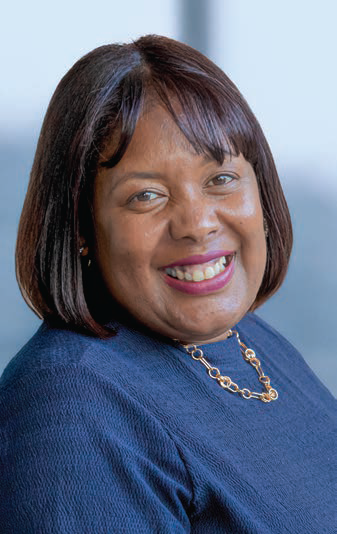
With over 20 years of experience in financial and management accounting, Levinia brings a wealth of expertise, including a solid background in the built environment gained through her work with property management companies. She holds a BCom specialising in Financial Management from Unisa and is currently pursuing her CIMA professional qualification. As CFO, Levinia plays a key role in strengthening governance, ensuring financial sustainability and enabling strategic decision-making at GBCSA.
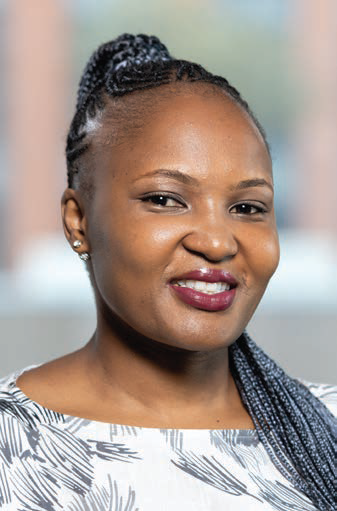
Babalwa holds a BCom Honours in Business Management, specialising in Human Resources, which supports her work in people management and organisational development. As HR Manager, she leads the organisation’s people and culture, driving key HR practices that support talent development, employee engagement and organisational effectiveness, while fostering an inclusive, supportive and high-performing workplace aligned with GBCSA’s mission.


