Learning curve
South Africa faces a critical student accommodation shortage, with about half a million beds needed. The challenge is no longer just to build more residences, but to deliver housing that is affordable, operationally efficient and environmentally sustainable at scale.
Sustainable student housing can scale, but only if it is industrialised, standardised and supported by aligned policy and finance. EDGE-certified developments (Excellence in Design for Greater Efficiencies), such as Cape Station in Cape Town, Fountains View in Pretoria and Johannesburg’s Yale Village, illustrate how design-led efficiency can improve cost, quality and student well-being.
The real issue is not whether sustainable models exist, but whether the sector can replicate them fast enough to meet demand, and whether certification translates into measurable performance in practice.
Embedding sustainability
In conversations with +Impact, a consistent thread emerges: scaling student housing demands that sustainability is embedded from the outset, not layered in later. Across developers, landlords, architects, sustainability experts and investors, the message is that speed and scale depend on early integration, not retrofitting.
For many, the breakthrough lies in standardisation. Moving beyond isolated “green” flagships, the sector is converging on repeatable delivery – unit typologies, bathroom pods, service layouts and material specifications that already meet sustainability benchmarks. This consistency enables faster design and construction while maintaining performance across entire portfolios.
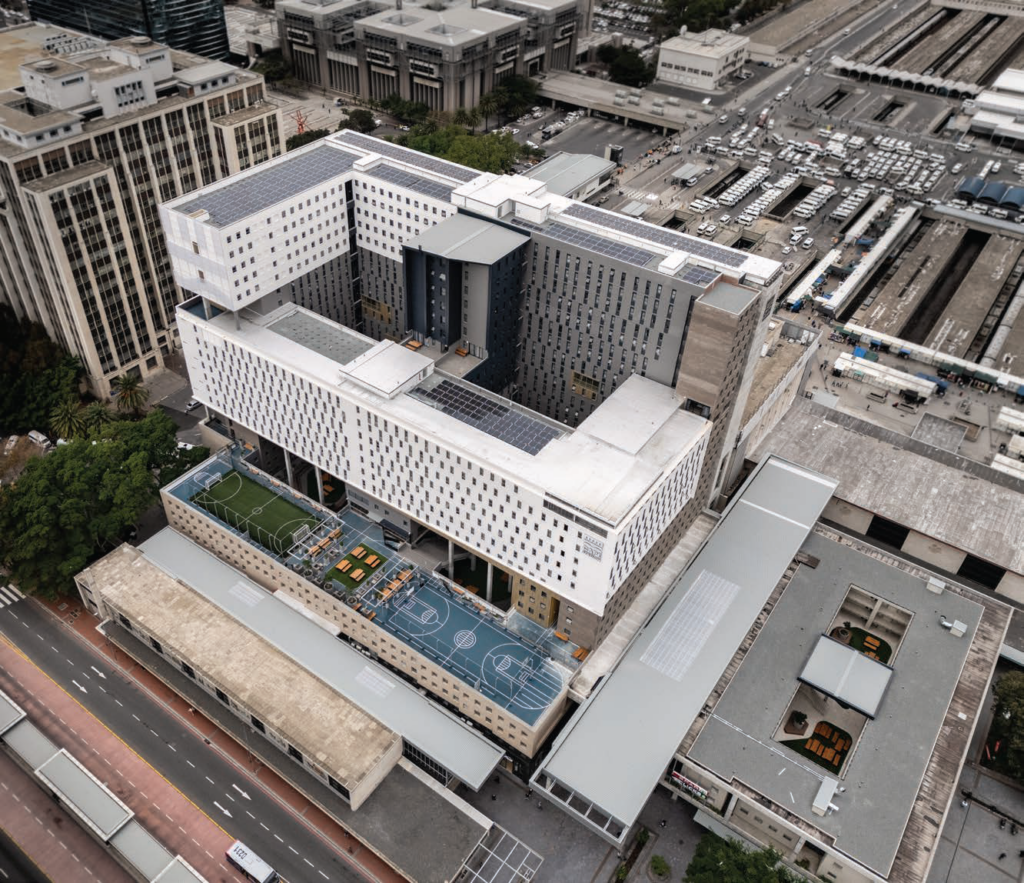
Johan Janse van Vuuren, executive head at Eris Property Group, points to Cape Town’s Cape Station, the largest single-phase student accommodation development in Africa, as a case in point. Standardised, sustainability-aligned design has enabled accelerated delivery while reducing operational energy and water use. Crucially, this model has delivered beds within the National Student Financial Aid Scheme (NSFAS) accommodation rates, demonstrating that scale, cost discipline and environmental performance can align when approached systematically.
The shift extends into construction – Dennis Farrell, Development Director at Respublica Group, the developers of Yale Village Student Accommodation in Johannesburg, highlights the role of industrialised methods and design strategies that prioritise long-term efficiencies. Modular systems, alongside integrated energy and water solutions, reduce lifecycle costs and reinforce affordability. Supporting these are public-private partnerships, the release of underutilised state land, and the integration of renewable technologies and water harvesting, accelerating delivery while containing costs.
Amogelang Mocumi, Fund Manager: Student Accommodation at Growthpoint Properties notes that managing upfront capital versus long-term value is a key trade-off. Sustainable design carries higher initial costs, but the discipline lies in prioritising interventions that materially reduce operational expenditure. Energy-efficient systems, water-saving infrastructure and renewable supply shift the cost curve over time, ensuring that savings directly support affordability across the life of the asset.
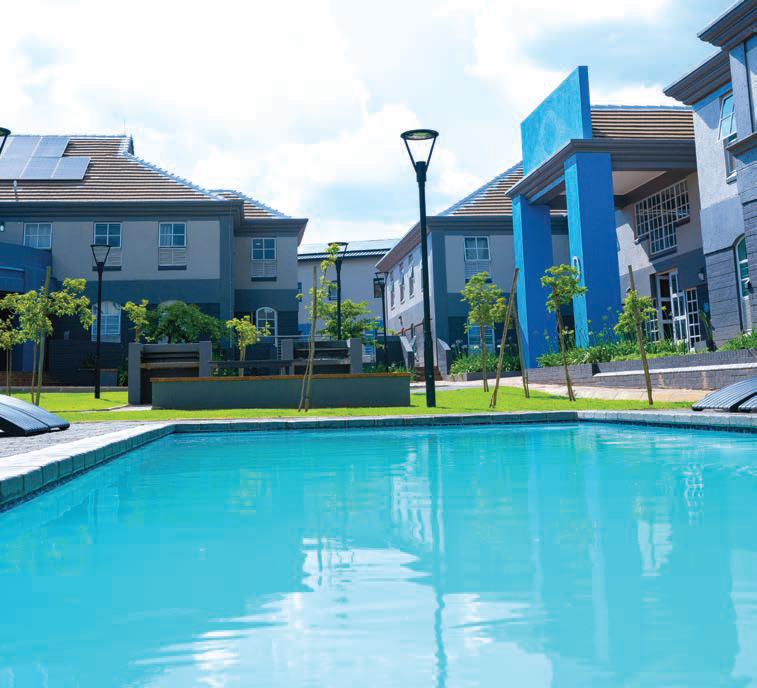
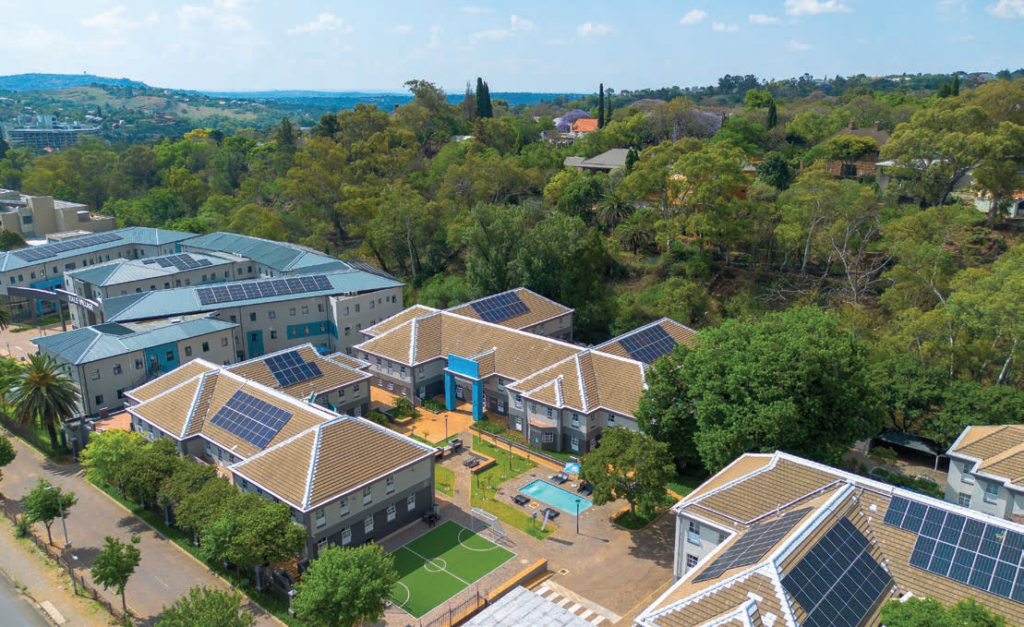
As the developers and owners of Fountains View in Pretoria, Growthpoint notes that design is also becoming more responsive. Developments are increasingly aligned to student demographics – accommodating more female students, improving accessibility for people living with disabilities and reducing transport-related emissions through proximity to campus or shuttle provision. These decisions deliver measurable social and environmental impact without undermining cost efficiency.
For independent property developer, Mpho Khorombi, with demand increasingly driven by reliability of energy and water supply, as well as overall living quality, developers must embed sustainability into financial models and operational planning.
From a market perspective, Kagisho Mamabolo, Private Student Housing Association CEO notes that the private sector remains the primary driver of delivery capacity, but long-term viability depends on cost-reflective funding and infrastructure support.
The implication is a shift towards lifecycle thinking. Targeted investments at design stage, particularly in energy and water efficiency, reduce long-term operating costs, reframing sustainability as a cost-management strategy rather than a premium feature.
Scaling, however, depends on more than technical alignment. Coordination between developers, funders and policymakers in unlocking land, accelerating approvals and enabling performance-based financing will determine whether this model moves beyond isolated success. With that alignment, the sector can deliver not just more beds, but better-performing assets at a lower total cost over time.
Efficiency for the long term
EDGE-certified developments are shifting the sustainability conversation from compliance to performance. The lesson emerging across projects is that certification matters only if it translates into measurable outcomes over the lifecycle of the building.
For architectural firm Boogertman + Partners associates, involved in Fountains View and multiple residential developments, EDGE has become a practical benchmark for embedding sustainability into design. It formalises what good architecture should already achieve – efficient, adaptable and human-centred buildings that remain liveable over time. The value lies less in the label and more in how seamlessly sustainability is integrated from the outset.
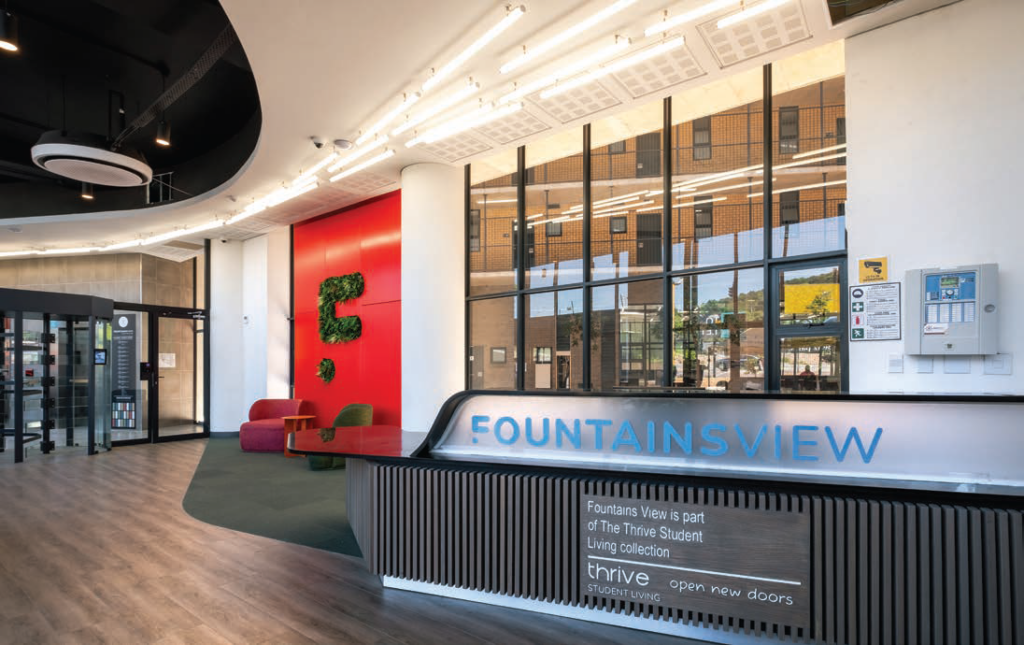
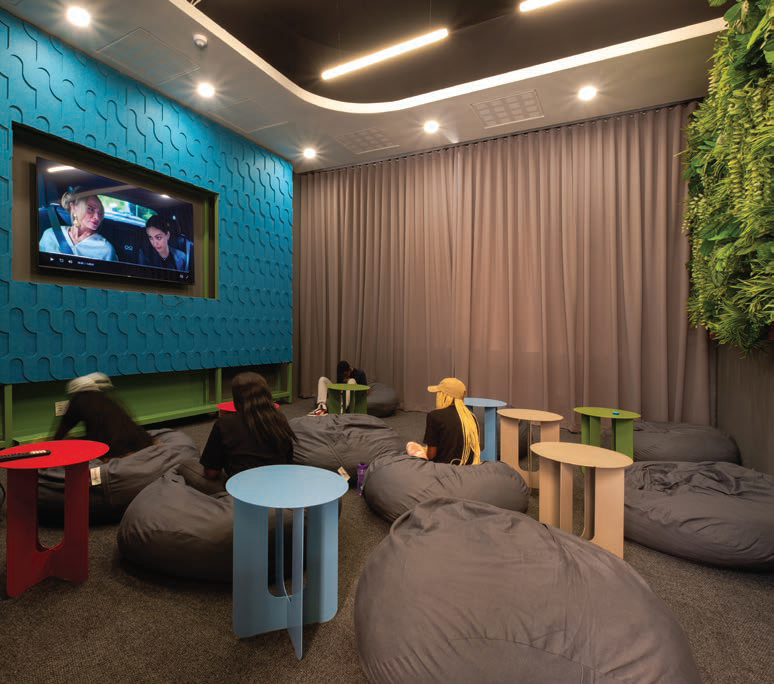
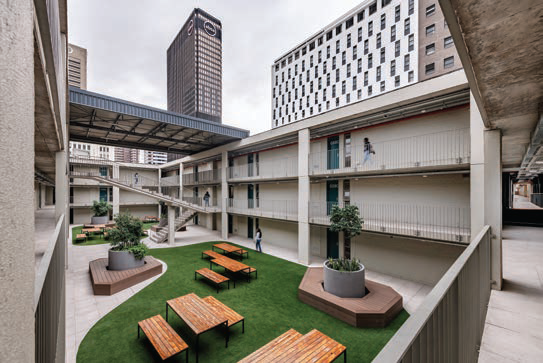
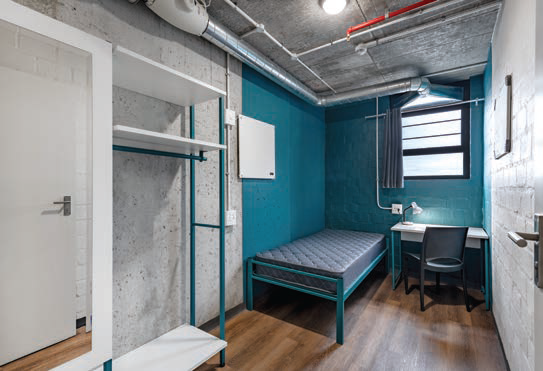
At design level, this translates into a decisive move towards passive strategies. Architectural Team Leader Alex Evdemon explains that long-term efficiency underpins affordability, shifting focus away from costly interventions towards design decisions that reduce demand. This is reinforced in execution, with Charles Swart, Associate at Boogertman + Partners, highlighting how material choices at Fountains View – clay brick and exposed concrete – lower maintenance requirements and, in turn, lifecycle costs. Spatial planning plays an equal role, with shared areas and visual connectivity fostering a sense of community while improving safety through passive surveillance.
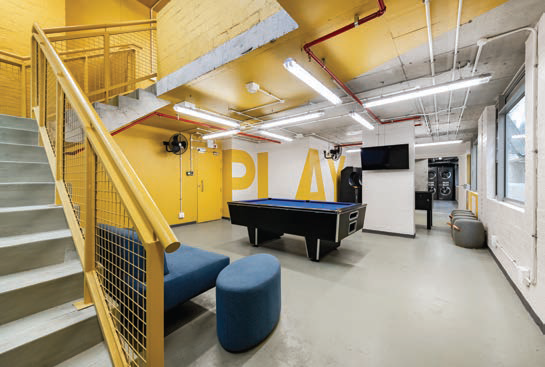
At scale, similar principles are evident in delivery, as seen in Cape Town’s Cape Station. The development prioritised efficient building envelopes, durable materials and shared amenities to reduce operational costs while maintaining quality in a high-demand urban context. The development chose cluster-style units to balance density with privacy, lowering per-bed costs and strengthening security through controlled access and active communal spaces. The underlying principle is disciplined simplicity, which reduces demand rather than adding complexity.
For Respublica Group, EDGE has evolved into an investor-aligned tool, valued for its clarity. It identifies practical, cost-effective strategies to reduce energy, water use and embodied carbon, which support long-term operational targets without overengineering solutions.
The real test, for Growthpoint, lies in post-occupancy, which emphasises tracking core metrics like energy and water consumption, the share of renewables, and carbon performance over time. These are increasingly read alongside social indicators, which include affordability thresholds, demographic inclusivity and transport efficiency. Together, they define value not just at completion, but across the building’s lifecycle.
HUMAN-CENTRED DESIGN
The next generation of student accommodation is being defined less by density alone and more by how it supports well-being, connects to the city and contributes to community life. Evidence continues to show that human-centred design featuring indoor environmental quality, access to daylight, views and acoustic comfort directly improves student health, sleep, academic performance and overall satisfaction.
Sustainability consultant Nonhlanhla Mathabela and André Harms, sustainability engineer and founder, both of Ecolution Consulting, say the opportunity extends beyond the building itself. Location and integration are decisive. Proximity to transport reduces both cost and environmental impact, while shared spaces that open into surrounding communities foster inclusion, safety and social cohesion. Mixed-use elements like retail, services and community facilities embed student housing into the urban fabric, reducing travel demand and strengthening neighbourhood economies.
Solid Green Consulting views South Africa’s student housing shortfall as a generational opportunity. A narrow focus on speed risks locking in inefficiencies and long-term cost burdens. A strategic response, by contrast, positions student housing as a lever for affordability, climate resilience and urban regeneration, notes Head of Modelling & Simulations Wardah Peters.
This signals a broader shift to student housing as urban infrastructure. Well-being now encompasses not only energy efficiency, but also thermal comfort, safety, accessibility and mental health-supportive environments. Ground-floor activation, inclusive design and local job creation are no longer peripheral considerations: they shape how developments function as resilient micro-communities rather than isolated dormitories, according to Solid Green.
Green finance and policy
Turning this into the norm requires alignment across policy, finance and planning. Kameel Keshav, former co-founder of Inkunzi Student Accommodation centres the issue on execution, adding that sustainable projects must become the easiest to approve, finance and operate. This means unlocking well-located land, enabling higher densities near campuses and transit, and fast-tracking developments that meet verified efficiency and safety standards. Financing must follow performance, with green loans, blended capital and guarantees linked to operational outcomes rather than upfront cost.
From a capital perspective, the direction is already shifting. Growthpoint positions green finance as a key enabler, using incentives such as reduced interest rates and performance-linked structures to bridge the gap between upfront investment and long-term savings. Initiatives like the IFC’s Market Accelerator for Green Construction programme point to how blended finance can accelerate delivery at scale.
Ultimately, as reinforced by Solid Green, alignment creates momentum. When planning frameworks, funding models and procurement standards consistently reward efficiency and resilience, the market adjusts quickly. Sustainability moves from exception to baseline to unlocking student housing that performs better, costs less over time and integrates meaningfully into the cities it serves.
South Africa’s student housing challenge is no longer just about addressing the shortfall. It is about delivering safe, dignified and sustainable accommodation at scale and offering spaces that enable academic success and long-term opportunity. Evidence shows that well-located, well-designed and well-managed developments create lasting value for students, cities and investors. The opportunity now is to use demand to reset the baseline, making efficient, inclusive, resilient housing the standard, not the exception.


