SMARTER SYSTEMS, GREATER IMPACT
SFI Group highlights how smarter HVAC monitoring, AI optimisation and maintenance strategies in buildings cut energy waste while improving sustainability and indoor environments.
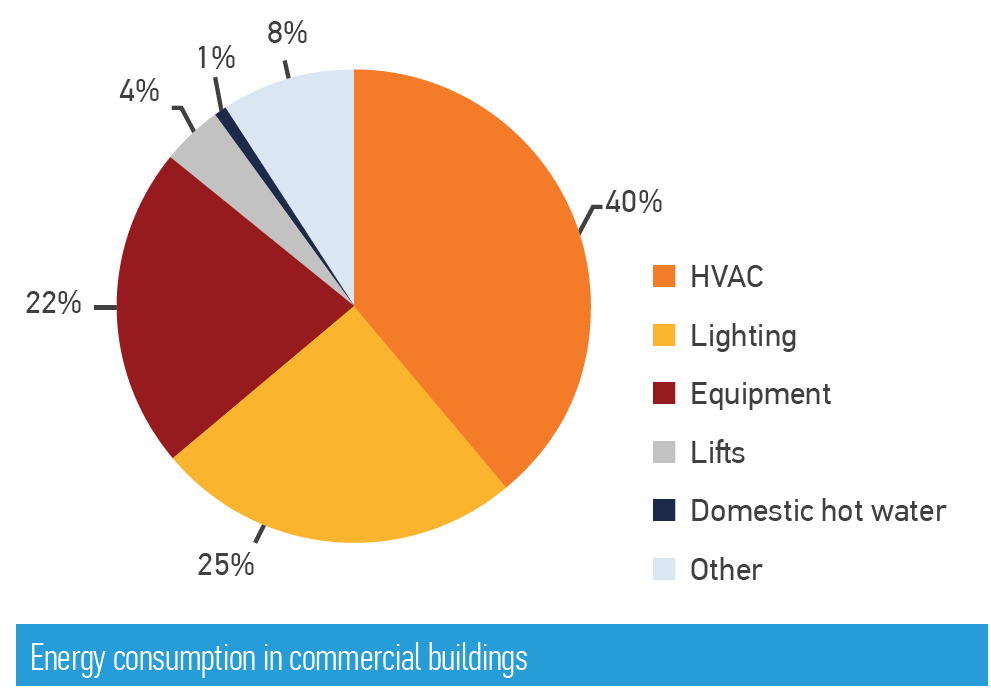
In South Africa’s current energy landscape, which is defined by rising electricity costs and ongoing grid constraints, building efficiency is no longer optional. Heating, ventilation and air-conditioning (HVAC) systems remain the single largest contributor to energy consumption in commercial buildings, typically accounting for 40–60% of total usage. Yet studies and industry experience consistently show that 20–30% of HVAC energy is wasted due to inefficiencies such as poor maintenance, lack of system visibility and outdated control strategies.
Many HVAC systems are designed correctly but operate far below optimal performance. Common inefficiencies include: Dirty coils and clogged filters increasing resistance; fans and motors overcompensating for airflow restrictions; systems running at constant load regardless of occupancy; and limited real-time performance monitoring. These issues result in equipment working harder than necessary, increasing both energy consumption and wear over time.
Facility managers gain real-time insight into system behaviour by continuously monitoring via IoT-enabled (The Internet of Things) sensors such as temperature and humidity; CO₂ levels (as an occupancy indicator); pressure drops across filters; and equipment energy consumption metrics. This visibility enables demand-controlled ventilation, where airflow adjusts dynamically, based on actual occupancy rather than fixed schedules. Buildings implementing IoT-based monitoring can achieve 10–20% energy savings, while also improving indoor environmental conditions.
IoT dashboards enhanced with artificial intelligence (AI) take optimisation to the next level. These systems can predict occupancy trends, monitor cooling and ventilation loads, and continuously learn and improve operational efficiency. In South Africa, where peak demand charges significantly impact operational costs, this level of control is particularly valuable. AI-driven optimisation can reduce HVAC energy consumption by 15–30%, while stabilising indoor comfort.
While technology plays a key role, maintenance remains one of the most powerful yet underutilised levers for energy efficiency. Poor maintenance directly increases energy demand: dirty coils can increase energy use by 15–25%, and blocked filters can increase fan energy consumption by 20–40%. By integrating predictive maintenance using sensor data and analytics, buildings can identify inefficiencies before they escalate, perform maintenance only when required and maintain systems at peak efficiency continuously. This approach reduces energy consumption while extending equipment lifespan and reducing unplanned downtime.
Air filtration is often seen as a trade-off between indoor air quality (IAQ) and energy consumption. Unlike traditional filters, electrostatic filters operate with a lower pressure drop (approximately 25Pa); have a longer lifespan than disposable filters (vacuumed/brushed 3-4 times a year); and maintain high particulate removal efficiency (99.97% efficacy against virus and bacteria). Lower resistance across filters means fans require less energy to maintain airflow, resulting in fan-energy savings of 10–25%, improved indoor air quality, and reduced maintenance and replacement costs.
Beyond energy savings, optimised HVAC systems directly impact occupant health and productivity. Research indicates that improved air quality can increase productivity by 8–11%, elevated CO₂ levels (>1 000ppm) reduce cognitive performance and better thermal comfort reduces absenteeism.
In commercial environments, this translates into tangible business value. The true potential lies in combining these strategies:
● IoT Monitoring → Real-time visibility
● AI-Recommendations → Intelligent optimisation
● Predictive Maintenance → Sustained efficiency
● Electrostatic Filtration → Energy-efficient air quality
Together, these can deliver total HVAC energy savings of 20–40% or more, while simultaneously improving indoor environmental quality. www.sfigroup.co.za


