Making a material difference
According to experts, South Africa has made a strong contribution to research and innovation around sustainable building materials and products, yet it can be argued that very few of these ideas make it to market, let alone into contemporary building projects. This dissonance begs the question: where is the disconnect between research and market adoption?
The status of local research
Jamie Smily, Managing Director of XLAM South Africa, a Cape Town-based manufacturer of engineered mass timber, says that there is excellent research coming from our universities and research institutions. “The intellectual capital exists,” he says, “but the problem is that it tends to stay in academic circles. The pipeline between research and market is poorly connected, and there’s almost no institutional infrastructure to bridge that gap.”
Professor Schalk Grobbelaar of the University of Pretoria’s Engineering and Technology Management department is heavily involved in this research sector. He focuses particularly on timber and engineered wood products. Grobbelaar also believes South African researchers produce meaningful work in these areas and “there is visible interest in green building, sustainable construction, circular economy thinking and alternative materials”. However, he qualifies this by adding that “the literature remains fragmented, often focused on isolated innovations rather than integrated system-level understanding”.
acceptance in the market remains a work in progress.
The chasm between proven idea and viable product
Grobbelaar and Smily agree that the failure point between research and market adoption is between proof of concept and commercial viability. Grobbelaar’s published papers “point to a gap in knowledge transfer, weak demonstration at the project level, limited funding support, poor market education, fragmented evidence and insufficient enabling conditions”. Smily adds, “There is no clear procurement pathway even if a prototype exists, and specifying professionals won’t touch it without local precedent.”
The struggle for market share
There is consensus that Small, Medium and Micro Enterprises (SMMEs) are at a considerable disadvantage when it comes to being able to take viable products to market. Smily explains that “large firms can absorb certification costs, maintain relationships with specifying professionals over long sales cycles and carry the overhead of market development, while SMMEs generally can’t”. The importance of SMMEs to the local economy cannot be understated. Smily asserts that “genuine innovation almost always comes from smaller, more agile players, but the structural environment systematically advantages incumbents”.
In practice and in context
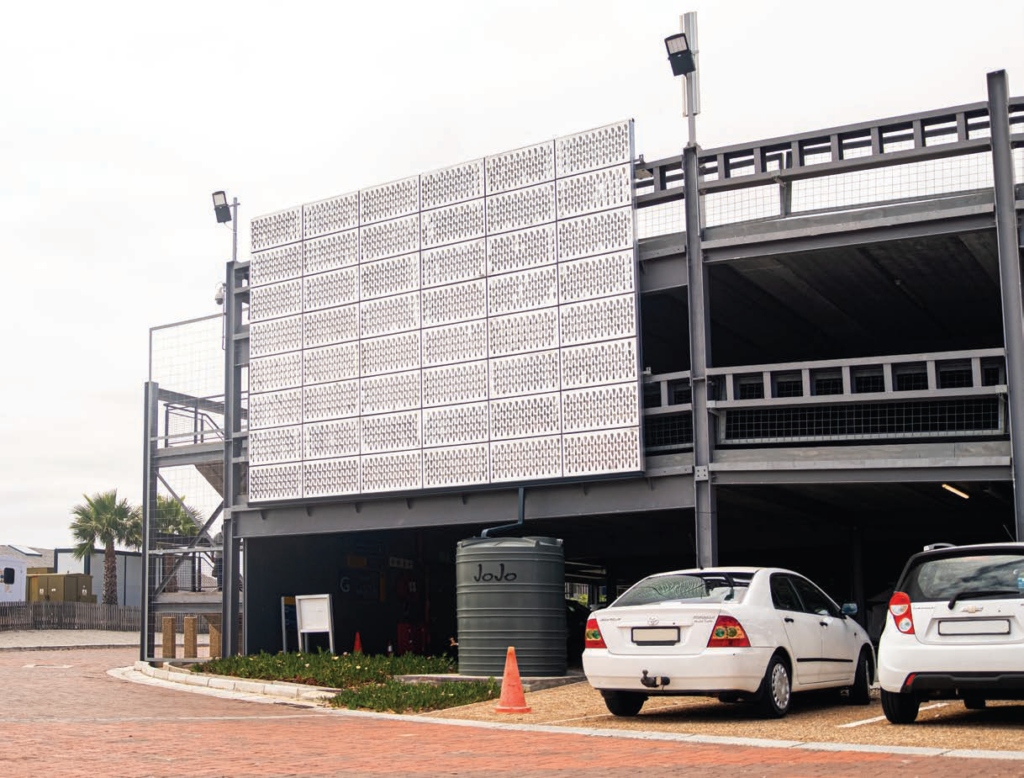
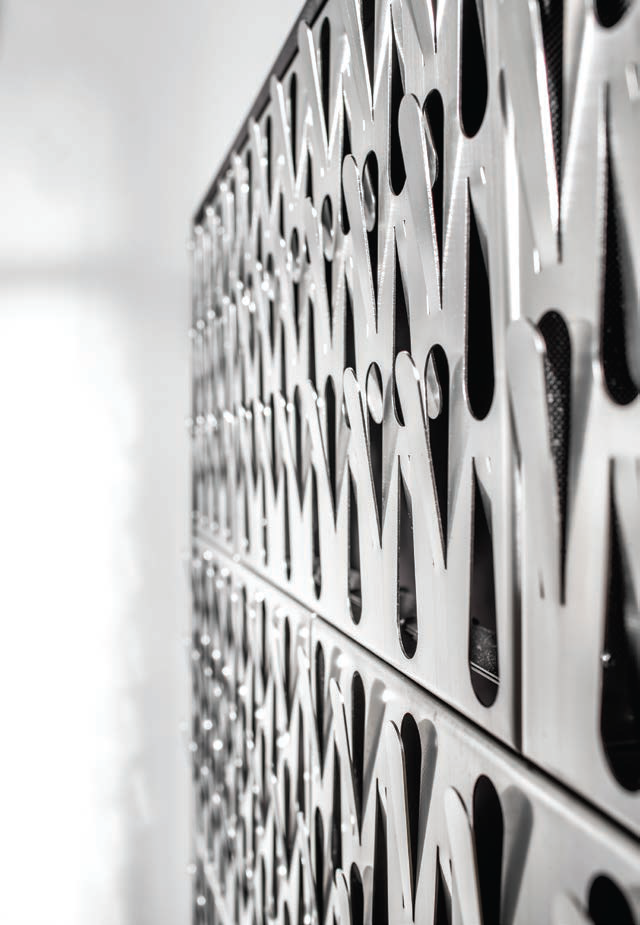
Shaakira Jassat is the force behind Studio Sway, researching and designing alternative materials for the construction industry. Currently based in the Netherlands, her roots are South African and she’s influenced by the challenges in that context. Her most well-known product, Aquatecture – a cladding system that rethinks sustainable water solutions in urban environments – is an innovative and elegant solution that harvests rainwater from buildings’ vertical surfaces. It emerged in response to Cape Town’s “Day Zero” threat with a successful pilot project in Cape Town.
Jassat concurs that cost is a real challenge to entrepreneurs. She has largely funded her product development herself, although she adds that she was very lucky to have the V&A Waterfront fund the Cape Town pilot project. But after that, she has had little success with either government or private-sector funding. She has encountered the same resistance to specification that other innovators face. Although her product is very simple, with no complex installation expertise required, and very few ways it could fail, there has been resistance to specify it due to the factors of cost, limited track record and a seeming lack of value placed on rainwater harvesting. She has also found that “it would be much easier and more economical to have the products produced out of South Africa, in China or India, while designers often look for sustainable production methods, meaning as locally produced as possible”.

Victor Bouguenon is the Managing Director of CemteQ, leaders in lightweight concrete technology. He explains that a large proportion of their products, including their lightweight concrete blocks, are made using recycled polystyrene. Since 2022, these blocks went from concept to fully fledged production, and they recently relocated to a 4 200m2 factory with further investment in significant equipment to cater for growth. Although this seems to be a success story, Bouguenon cites the same barriers to entry, including the costs of development, lack of adequate funding, restrictive building standards and a price-sensitive market.
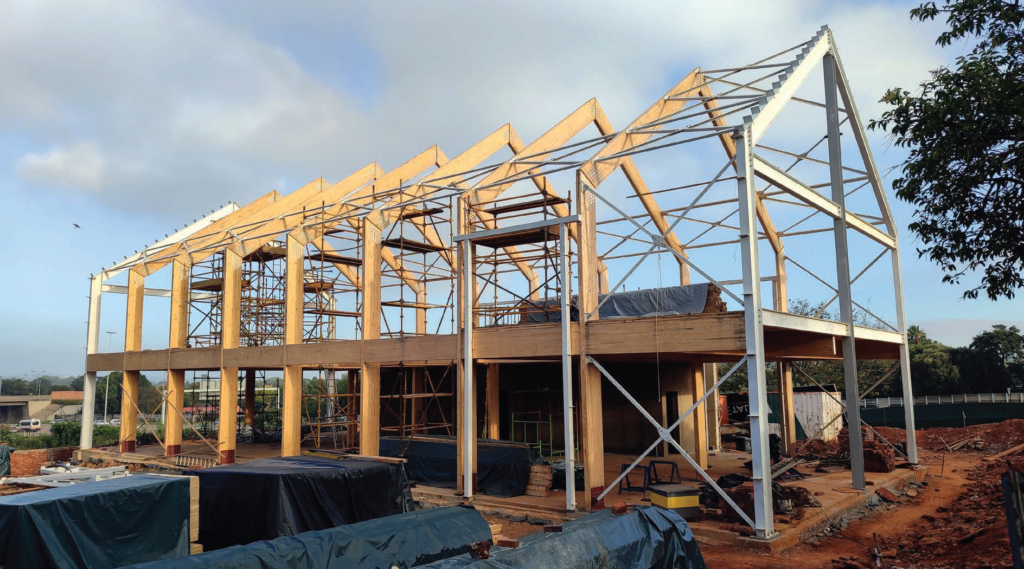
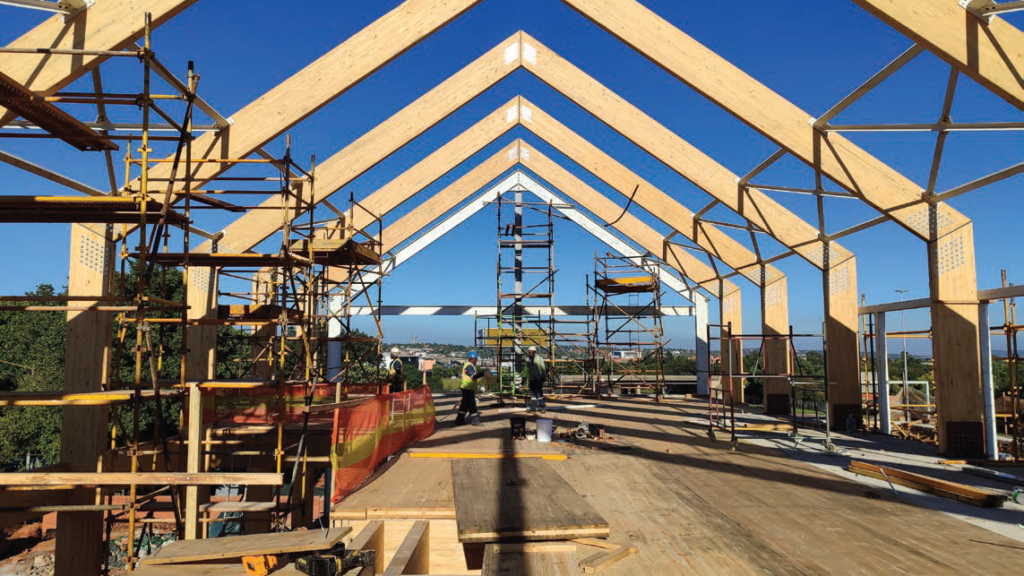
In the case of XLAM South Africa, manufacturing cross-laminated timber (CLT) and glulam, Smily explains that the innovation is not in the product itself as it is well-established in Europe and Australasia, but in the fact that it is being manufactured locally, which makes a big difference to cost, lead times and environmental impact. “Getting here has meant working through a regulatory environment that wasn’t designed with these products in mind, educating a professional community that largely hasn’t encountered the products, and making a commercial case in an industry that defaults to concrete and brick,” he says.
The specification dilemma
According to Grobbelaar, specifiers “trust new materials when there is credible performance evidence, clear standards, accessible technical information, proven case studies, trained professionals and visible project success”, and hesitate due to “uncertainty around safety, durability, fire performance, approvals, liability, insurability, cost and constructability”. Lyall Dukes and Richard de Klerk are Executive and Associate architects, respectively, at SVA International. They echo these reasons for hesitation. “Few architects are willing to risk being the ‘guinea pig’ for new architectural products due to Professional Indemnity constraints,” says Dukes. De Klerk adds that he would only consider specifying solutions that have been tested on other projects. He believes that most product innovation in South Africa is inherited from international companies, perhaps highlighting the lack of awareness of local research, and the dearth of local products available.
Dukes recently undertook the design of a mass-timber building in Centurion, for the Equate Group. The material choice was client driven. He believes the uptake for this material has been slower here due to poorer wood quality than elsewhere in the world, and the impact of termites, borers and other pests. “Several lessons have been learned relating to the technical design of the build, with specific detailing and design resolution required to maintain the quality and maintenance durability of the timber on a 20-year life cycle. The conclusion is not certain… there are advantages and disadvantages that can be drawn from this experience. The sustainability advantages are numerous but the technical appropriateness of the product in the SA context is debatable, in my opinion,” he says, perhaps epitomising the struggle of “perception” that Grobbelaar has reported on.
Regulations: Friend or foe?
It is generally accepted that regulations and standards are important for ensuring that building projects are safe and fit for purpose, but appear ill-equipped to handle new or unusual materials and technologies. Grobbelaar’s study on barriers to adoption of new materials argues for “more flexible but still robust standards and codes”. “In principle, codes and standards should enable adoption by creating certainty. In practice, when standards are incomplete, conservative, hard to interpret or poorly aligned with emerging materials, they increase hesitation,” he says. Smily adds, “The performance-based provisions in the National Building Regulations do offer a pathway for non-standard products, but using them requires a cooperative local authority and a level of technical confidence not always present.” There are bodies, such as the South African Bureau of Standards (SABS) and Agrement SA, in place to test and certify new products, however the processes are reportedly long and costly.

Bridging the gap
Several reforms are required to improve the research-to-adoption gap. Regulatory processes, standards and codes would need to enable easier compliance for new products, while testing and certification processes could also be made cheaper and faster. Funding for entrepreneurs and innovators themselves would assist with the certification process. Rebates or carbon credits could facilitate the adoption of new materials by developers. According to Grobbelaar,“The route to adoption must include evidence, demonstration, education and storytelling, not just laboratory validation. Finally, adoption should be viewed as a system problem; unless clients, regulators, designers, contractors, financiers, insurers and suppliers move together, scale will remain elusive.”