Shaking up the SYSTEM
PROJECT NUTSHELLS
“Certifying key public infrastructure like schools and clinics with a sustainability standard as robust as Green Star Existing Building Performance (EBP) is a phenomenal achievement, and an exciting step forward in mainstreaming green practices across government buildings.” – Bakang Moeng, Manager: Public Sector Advocacy & Sustainability, GBCSA.
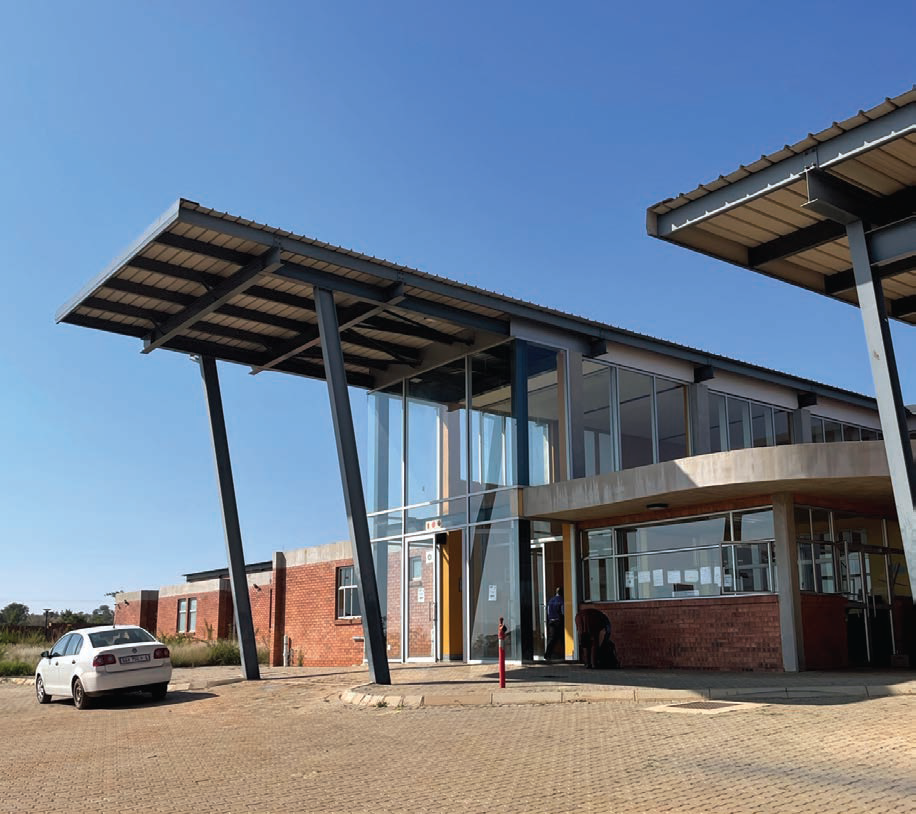
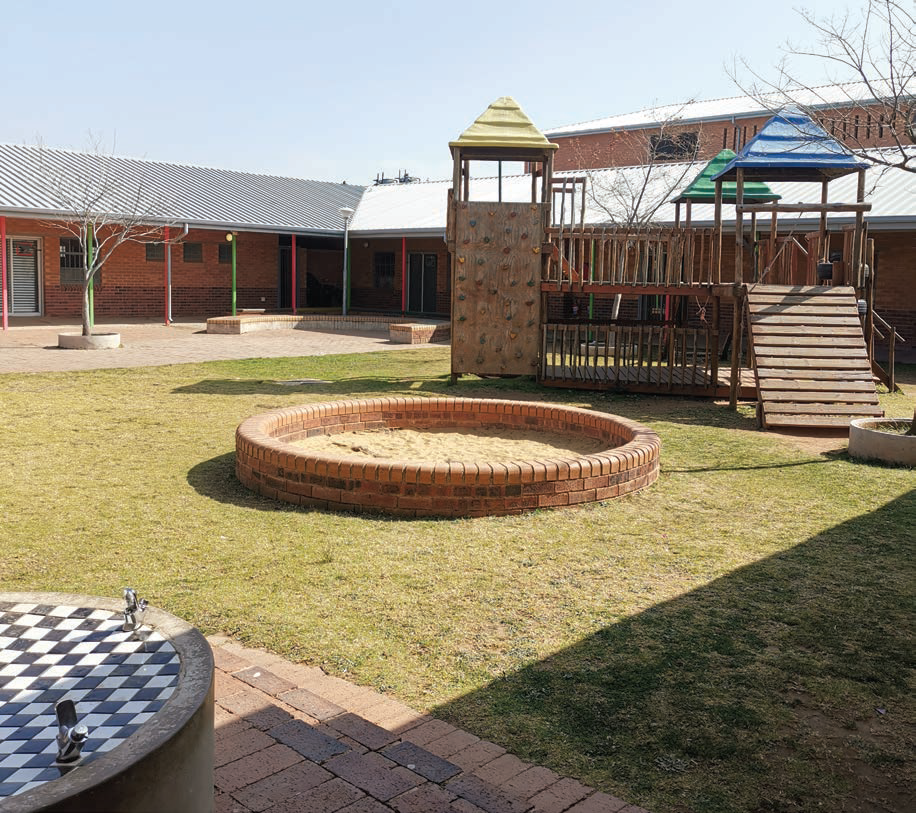
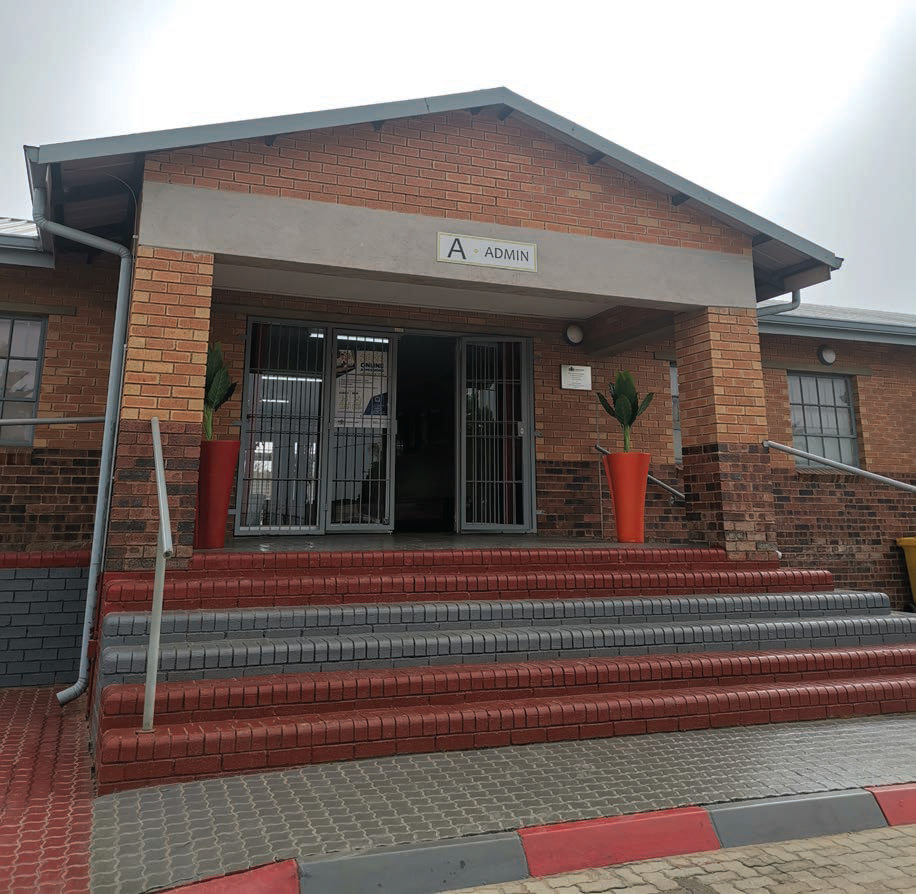
Gauteng – the economic hub of Africa, where new developments are commonplace, yet existing buildings tend to be forgotten. The tide, however, is turning – quite soon, green government buildings may just become the norm. Joining forces with Solid Green Consulting, the Gauteng Department of Infrastructure Development (GDID) spearheaded Green-Star certification for Sinenhlanhla Primary School in Bronkhorstspruit, Julius Sebolai Primary School in Soweto, Dewagensdrift Clinic in Cullinan, and Kekana Gardens Clinic in Hammanskraal.
The objective was clear: to build a government property portfolio that is fully green in the run-up to the 2030 net-zero targets. Together, Solid Green and the department’s Green Technology Directorate laid the foundations for this ambition – and showed the industry how it can be done.
“Green Star certification is no longer a project-based initiative; it is embedded in our standard operational procedures,” says Ngcebo Nsimbini, Control Environmental Officer for the Green Technology Directorate at the Gauteng Department of Infrastructure Development. “The goal is no longer just a successful project. It’s about transforming the department to operate sustainably across the entire property portfolio of approximately 12 000 buildings.”
The first step towards achieving Green Star ratings across the portfolio is to use these properties as benchmarks. “We realised the best place to begin is to target Green Star certification for existing buildings, particularly 4-Star for these facilities.”

In a province plagued by infrastructure problems, Nsimbini believes that from a resource-efficiency perspective, Green Star is the way to go because it requires project teams to focus on auditing buildings and setting benchmarks, based on the data received. “We have a saying in the team: What you don’t know, you can’t measure – and what you can’t measure, you can’t improve.”
Institutional transformation
According to Nsimbini, transformation within the supply chain and finance sectors is the most critical element for achieving tangible institutional progress – but it’s often the most challenging part, especially in the absence of support.
The push for greener public infrastructure in Gauteng Province is not just because of National Treasury Procurement regulations. It’s also because of the Green Procurement Standards, which encourage the incorporation of green principles in the main procurement. These choices for sustainability lead to energy- or water-efficient design, Green Star certification, and the use of solar and other renewable technologies in projects. Procurement is therefore an enabler for green projects.
“In the past, the principle of the Public Finance Management Act determined that if you were appointing either a contractor or a consultant, even if it was a green consultant, one would normally have gone for the cheapest cost,” she recounts. Now, a prime candidate is identified as someone with an understanding of green buildings, who upskills relevant teams and incorporates that into their tendering documentation. “These green procurement standards really helped us because you must meet the Green Star credits for the different components considered in the rating.” Meeting these standards and aiming to achieve a 6-Star Green Star – New Build rating are also embedded in the department’s operational study, but the GDID’s Green Technology Directorate team identified a gap: within the department, sustainability efforts largely ignored existing buildings. “We have not seen any action or work around green buildings, particularly the existing portfolio, which normally gets neglected,” she says. “It is time to drive energy and resources into making these buildings more sustainable.” It took some convincing.
From stigma to strategy
The biggest challenge was breaking the stigma that green certification is a luxury. The path to the pilot project was paved with workshops that highlighted the value of treating new projects not only as benchmarks, but also as catalysts for change.
“Convincing our partners that Green Star certification was a necessity, rather than a luxury, took time,” she says. “We had to be trained as Accredited Professionals [APs] and attend workshops with our various partners to explain why we want to do this, and why we are not only pursuing it for new developments. Funding also had to be secured, especially, as priorities often conflict,” Nsimbini noted.
Now that there’s understanding and buy-in, this EBP rating could inspire even more support in the future, because of tangible data. The Green Technology Directorate team tracks savings over a two-year period, during which changes have been made in buildings. The information ranges from savings on electricity and water to waste management and, in some cases, the health benefits of indoor spaces are also quantified. The team then convinces these properties to use the savings they would have spent on wasteful or uninformed daily activities to improve the building’s functionality.
The approach
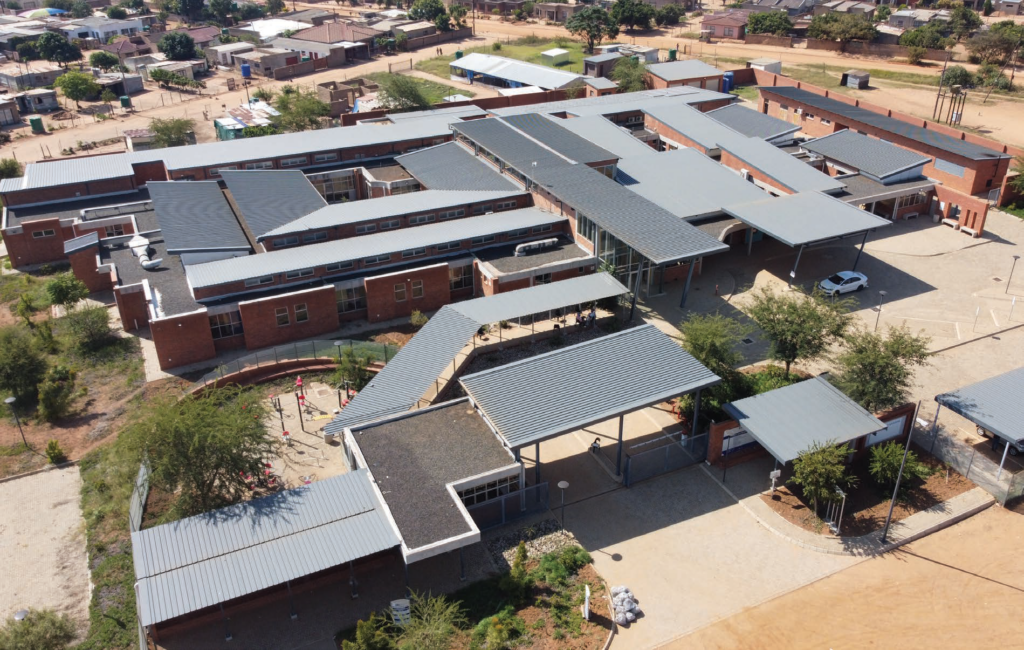
The government worked with Solid Green (in close cooperation with Imbue Sustainability at the time), which had to navigate uncharted terrain. “These weren’t standard office or retail buildings,” says Danika Taylor, the project’s Green Star AP in Existing Building Performance (EBPs). “We had to rethink the methodology to suit schools and clinics. All these buildings are managed collectively, so one plan can cover multiple structures.”
Unlike a typical office block, schools consist of multiple buildings used as classrooms, for administration and as halls. Although they serve different functions, they are administered together – and that was the approach here.
Data collection took approximately one day per school or clinic, covering around 3 000 –10 000m² per site. Taylor worked closely with Green Building Council South Africa (GBCSA) to ensure that despite some adjustments, the council’s standards remained intact while covering multiple structures with one plan.
“We set up a new methodological approach and submitted it to GBCSA,” she says. “They then gave us notes on whether they viewed something differently, or what we would consider a regular occupied space in a school or clinic, versus in an office building – elements not found in a standard technical manual.”
On-site audits were conducted to collect data on the fresh air readings, artificial and natural lighting, thermal comfort and acoustics. In addition, survey feedback was gathered from regular occupants on their comfort levels in the spaces,” says Taylor.
The schools benefit from good indoor air quality, supported by well-ventilated classrooms where windows and doors are open most of the time, contributing positively to their performance in this area.
Key initiatives at the schools included creating a Building User Guide to inform occupants on optimising site performance, ensuring excellent daylight and fresh air levels in classrooms, and improving energy performance against a baseline using South African National Standards (SANS XA:2021 for A3 Place of Instruction). Taylor adds that energy metering was automated, allowing performance tracking, but water monitoring was not. “We couldn’t target the Water Performance credit because council meters weren’t tracking properly, so we recommended improvements going forward,” she explains. The GDID recognised the need for this and is already working to implement this recommendation.
According to Nsimbini, this Green Star project led their team to explore and develop a smart water-metering system. “If we know we’re targeting Green Star rating in a year, we ensure those facilities are smart-meter ready and water-meter ready, so that there’s credible data we can use for the certification process.”
Nsimbini adds that entrenching green principles, especially among children, is being achieved in creative ways, such as initiatives to track which school does the most recycling or uses the least electricity. Taylor adds that working with children is like a breath of fresh air. “It was fascinating to see how children interacted with the spaces during our audits – they have a level of curiosity and engagement that you don’t find in corporate offices.”
Systemic change
The clinics, on the other hand, fit the existing criteria better, sharing similarities with office blocks and other single-use buildings. According to Taylor, sustainable policies, plans and monitoring can make a big impact on a Green Star EBP rating, and many improvements don’t require expensive upgrades. Although there’s still a long way to go, the tide is slowly turning, and mindsets are changing.
“If we can live up to the rating, our next target is to get them to six stars,” adds Nsimbini. “From the success of this project, we’re currently tackling another four buildings, and we’re in the energy benchmarking phase for a new set of buildings.”
Despite less focus on physical upgrades, the emphasis on policies and plans (such as landscaping, green cleaning and procedural standards) is intended to ensure long-term operational improvements across the department’s building portfolio.
“The dream is really to embed Green Star in the department’s standard operations from a capital-expenditure perspective, making it routine to apply Green Star to existing buildings,” explains Nsimbini.
Eventually, the GDID also hopes to target facilities within the Johannesburg CBD that can be revitalised and repurposed, for which some elements need to be rebuilt. Says Nsimbini, “We need to embed sustainability concepts so they become the default, not optional.”


