Making an Impact
A net zero milestone
Growthpoint Properties has reached a major sustainability landmark, securing 12 Net Zero Carbon certifications across its South African office and logistics and industrial portfolios. This achievement reflects the company’s long-term decarbonisation strategy, which includes a target of 20 certified buildings by 2028 and carbon neutrality across its portfolio by 2050.
The certifications are aligned with GBCSA’s Net Zero Carbon framework, which recognises buildings where operational carbon emissions are measured, reduced and balanced through renewable energy and verified offsets. Growthpoint’s projects integrate rooftop solar photovoltaic (PV) systems, energy-efficient building technologies and advanced monitoring tools to reduce reliance on grid electricity and improve performance. “Reducing operational carbon emissions across our portfolio is an important part of how we future-proof our business, support our customers and contribute to the transition to a lower carbon built environment,” says Engelbert Binedell, Chief Operating Officer at Growthpoint Properties.
The logistics and industrial portfolio has been a strong contributor, with certifications achieved at Monteer in Isando, Ebony in Meadowdale, Growthpoint Industrial Estate in Germiston, Meadowbrook Estate, Trade Park in Mount Edgecombe and 20 Rustic Close in Durban North. Meadowbrook Estate is particularly notable for achieving certification with 0% offsets, showing the potential of highly efficient buildings paired with on-site renewable energy.
“The logistics and industrial sector presents significant opportunities to improve energy performance at scale, particularly through solar PV deployment, operational optimisation and better energy visibility,” says Jason Reeves, Head of Asset Management for Growthpoint’s Logistics and Industrial Portfolio. “Customers are increasingly looking for cost-efficient workspace that supports both their operational and sustainability objectives,” says Timothy Irvine, Head of Asset Management for Growthpoint’s Office Portfolio.
Growthpoint’s broader decarbonisation strategy includes rooftop solar expansion, renewable energy wheeling, and long-term power purchase agreements, reinforcing its leadership in sustainable property operations.
CULTIVATING CHANGE
More than 750 schools across South Africa are joining the fight against hunger through the EduPlant school greening programme, which equips learners with practical skills to establish food gardens and plant fruit trees. Founded over 30 years ago by NPO Food & Trees for Africa and supported by Tiger Brands, EduPlant has already helped at least 13 000 schools create gardens that supplement meals provided through the National School Nutrition Programme.

Of the schools on board, 252 will integrate food gardens into the national curriculum, combining theoretical and practical learning. The remaining 500 schools will be supported to plant and care for fruit and indigenous trees, extending the programme’s reach to thousands of learners nationwide. Over the next 18 months, schools will participate in South African Council for Educators (SACE)-accredited workshops covering permaculture principles, soil and water management, climate smart agriculture, pest management, seed bank development, agro processing and nutrition. “Food security and good nutrition are fundamental to thriving communities,” says Maanda Milubi, Director Enterprise Supplier Development and Transformation at Tiger Brands, reflecting the programme’s dual focus on building resilience and reducing vulnerability to food insecurity.
Research by Food & Trees for Africa shows that more than 60% of learners apply what they learn at home and within their communities, ensuring long-term sustainability. “What makes EduPlant powerful is that it is not just about greening; it’s a blueprint for community empowerment,” says Bharathi Tugh, Food & Trees for Africa’s Education Associate and EduPlant Programme Manager.
The initiative culminates in the National EduPlant Competition, which recognises the best-performing schools for their commitment to permaculture practices and thriving food production. www.eduplant.org
CIRCULAR CONSTRUCTION
Saint-Gobain South Africa has launched a free gypsum recycling service at its Gyproc factory in Brakpan, Gauteng, marking a first-of-its-kind initiative in the country’s construction industry. The service enables contractors and developers to divert gypsum waste from landfill at no recycling fee, removing a critical cost barrier and setting a new benchmark for accessible circular construction.
South Africa’s construction sector faces mounting pressure from landfill capacity constraints, tightening regulations and rising waste disposal costs. By offering a practical, scalable solution, Saint-Gobain Africa is advancing its Make it in Africa to Build Africa (MABA) commitment, ensuring valuable materials are recovered and reintroduced into the production cycle rather than lost to landfill. “Gyproc’s gypsum recycling service makes circular construction practical,” says Christo Smith, Managing Director for Walls and Ceilings at Saint-Gobain Africa, underscoring the company’s focus on removing barriers to responsible waste management while aligning sustainability with commercial realities.
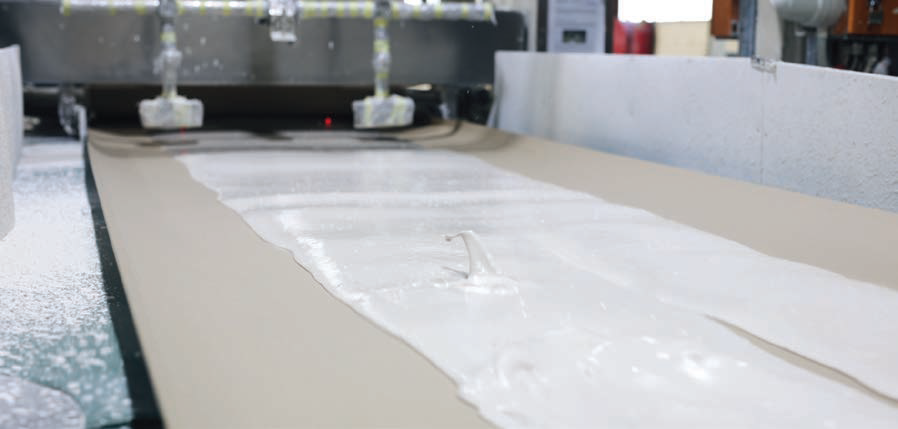
The service is designed with real-world project conditions in mind, allowing gypsum offcuts and site waste to be collected and recycled without adding cost or complexity. Unlike traditional disposal methods, it provides contractors with a straightforward way to reduce waste and improve resource efficiency. “By removing the recycling fee, we are accelerating the shift to circularity and enabling meaningful change at scale,” says Estie Van Zyl, Sustainability Manager at Saint-Gobain Africa.
Beyond product innovation, Saint-Gobain Africa is rethinking material flows from production through to recovery and reuse. The gypsum recycling service represents a tangible step towards closing the loop in construction materials, but the company stresses that collaboration across the value chain will be essential to achieving true circularity. www.gyproc.co.za/gyproc-gypsum-recycling-service-0; www.saint-gobain-africa.com/en
Owning the street
The Corlett Drive Improvement Precinct (CDIP) is a collaborative effort aimed at restoring safety, pride and vitality to one of Johannesburg’s key business corridors. By uniting property owners, businesses and community stakeholders, the precinct is building a coordinated approach to urban management that tackles cleanliness, security, public space activation and long-term economic sustainability.
Since launching in April 2025, CDIP has moved quickly from planning to visible action. By June, daily clean-ups, layered security patrols and community events were underway, already making Corlett Drive safer and more welcoming. The initiative is run as a registered non-profit under “Let’s Corlett,” with a clear mission to halt urban decline and restore community pride.
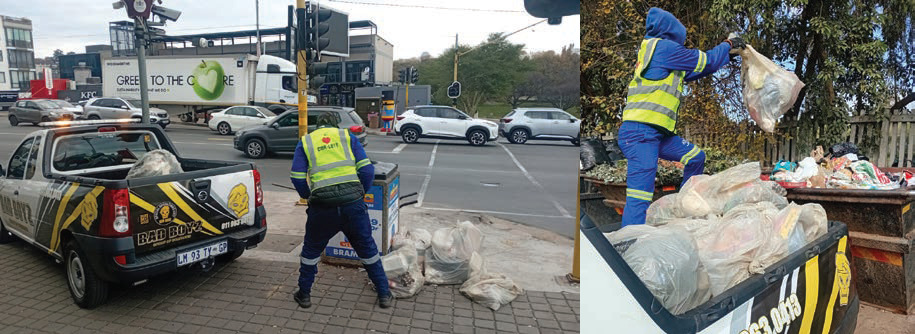
Daily clean-ups along Athol Oaklands Road to the M1 are removing multiple bags of waste each day, with expansion towards Fairways planned. Security has been strengthened through partnerships with Melrose Arch security, volunteer training by Bad Boyz and CAP back-up support. Volunteers equipped with walkie talkies act as “eyes and ears,” adding vigilance to the corridor. Community activation is also central, with Balwin Properties hosting weekly fun walks and runs at the Balwin-adopted park, encouraging visibility and cohesion along the green corridor to Sandton.
The model follows the success of other Johannesburg City Improvement Districts, including Rosebank and Sandton, which reversed decline through coordinated cleaning, security and community activity. “Crime’s still high and the City can’t do it alone. When communities unite with consistent levies and visible effort, streets go from vulnerable to vibrant,” says Mark Pencharz, Chair of CDIP. With partners including Melrose Arch, Balwin Properties, Blue Bird, Redefine, Watprop and Wanderers, CDIP is gaining momentum as a model for collaborative urban renewal. www.corlettdriveip.co.za
JOIN THE people shaping The Green Revolution!
Green Building Council South Africa’s annual Green Building Convention is more than a date on the calendar: it’s the gathering place for the built environment to exchange ideas, challenge assumptions and explore new solutions.
Over three days, architects, engineers, developers, investors, policymakers and sustainability leaders will connect, collaborate and inspire one another. Expect global thought leaders, ground-breaking projects and practical insights that extend far beyond the stage. The true value lies in the conversations you’ll have, the people you’ll meet and the opportunities you’ll discover. Join the movement for sustainable change – where collaboration sparks progress and innovation drives results.
When: 27–29 October 2026
Where: Century City Conference Centre, Cape Town
Register here.


