Built on solid ground: WHAT THE DEEDS DON’T SHOW
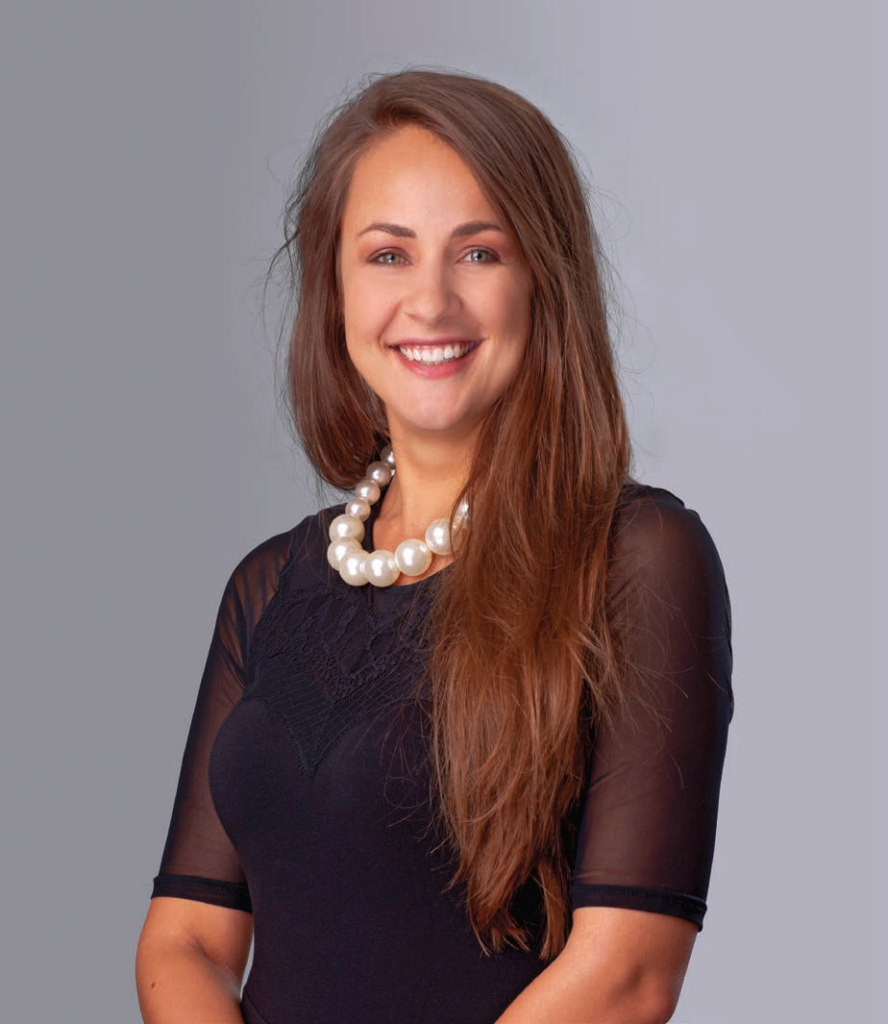
Suné Kruger, Director of Real Estate Law and Conveyancing at Cliffe Dekker Hofmeyr, reflects on her career path – viewed through the lens of a woman – and highlights the unseen depth and meaning in the daily practice of property law.
There is a moment, early in your legal career, when you stop searching for a path that fits a plan and start recognising the path that fits you. For me, that moment came when I stepped into the world of real estate law and knew, almost immediately, that I had arrived somewhere that mattered. What I could not have anticipated was just how much that world would ask of me, but also how much it would give back.
The hidden depth
When people think of real estate law, they often picture transactional paperwork and title deeds, work that is administrative, routine and straightforward. That perception could not be further from the truth, and it is precisely the gap between assumption and reality that first drew me in. There is a depth to property law that is not immediately visible: it demands intellectual rigour, acute attention to detail and an instinct for problem-solving that few disciplines can match. The practice I joined had been established for many years and spoke volumes about the calibre and commitment of those who had chosen this path before me. It was a field with heritage, integrity and substance.
Before finding my home here, I completed a master’s degree in estate planning law, which gave me a strong grounding in trust and estate work, a framework that would prove invaluable. During my articles, I was also exposed to dispute resolution and employment law, both demanding disciplines that broadened my perspective considerably. Real estate law, however, was where I found my footing. The variety of matters, the volume and pace, and the satisfaction of seeing a transaction through from inception to registration all combined to excite me in a way that nothing else had. At its core, it is problem-solving in motion, and that is where I have always felt most alive professionally.
The making of a conveyancer and a notary
My qualifications only tell part of my story. I commenced articles in 2018 at Cliffe Dekker Hofmeyr, and in that same year wrote and passed the attorney board examinations. In mid-2019, I got married. Two weeks after our wedding, I began preparing for the conveyancing examination and passed it later that year. That detail is not incidental. Preparing for the conveyancing examination so soon after getting married was the first real test of my determination to build a career in real estate law.
The conveyancing examination is a rigorous and demanding undertaking, and it required everything I had. It was the moment I truly understood what commitment to this field required, not just intellectual commitment, but personal and emotional determination. In 2020, I wrote and passed the notarial examination, completing the trilogy of qualifications that define my practice today.
What inspires me most about this field has never changed. The challenges and complexities remain immediately stimulating, the fact that no single person can know everything, and that the law governing property is constantly evolving. But beyond the intellectual dimension, what truly captivated me from the beginning was the deeds registration system and what it represents. We are not simply processing documents. We are conferring real rights. We are giving people access to property, and in doing so, giving South Africans a tangible stake in their country. There is something profoundly meaningful about that work.
The weight of proving yourself
The most daunting aspect of entering this field was not the technical demands; it was the need to build the confidence to truly believe in myself. The industry was, and in many respects still is, male-dominated. As a young woman, I was acutely aware of the pressure to earn my place: to assert myself with authority and professionalism, without being perceived through the lens of stereotypes so easily applied to women in demanding environments. Learning to be firm without apology, and to command respect through excellence – that was the real journey.
Juggling numerous matters simultaneously, against extreme deadlines and across large teams, requires exceptional organisation and composure. Conveyancing is also remarkably underrated in terms of its intellectual demands, and that is before considering the additional layers that commercial real estate brings. Maintaining the precision that every matter deserves, regardless of how many are in motion at once, is perhaps the greatest ongoing professional challenge. But it is one I have grown to embrace.
The double-edged sword
Being underestimated can be one of the most powerful advantages a woman in this field possesses. It has certainly been one of mine. I am a mother of two young children, and I experienced two consecutive pregnancies in quick succession – the first shortly after being promoted to senior associate, and the second just before being promoted to partner. In anyone’s language, that is a significant professional and personal balancing act. But it taught me something that no examination or transaction ever could: the superpower of being a woman lies in our extraordinary capacity to be multi-layered and multi-skilled, to stretch, adapt and carry what is required across every dimension of our lives, professional and personal, simultaneously. Motherhood did not diminish my ambition. If anything, it sharpened it.
The other side of this is equally real. Being underestimated is a double-edged sword. While it can work in your favour, it also means having to work harder and longer to prove yourself. The burden of demonstrating capability, of earning credibility that a male counterpart may be afforded by default, is real, and it is ongoing. It demands a resilience that should not be necessary but undeniably is. That burden is not something to be silent about. And yet, being a woman in this field has, without question, motivated me rather than deterred me. It has reinforced my determination to excel. The practice I work in today is made up of 99% women, a testament to the extraordinary strength and capability that women bring to this profession. We carry enormous responsibility: we solve problems daily, and we do so with a quiet diligence that is not always recognised or celebrated in the way it deserves to be. That reality motivates me more than any obstacle ever could.
To the next generation
If I could speak directly to the young women entering the legal profession today, and in particular those considering real estate law: Never stand in the shadows. You belong here, fully and unapologetically. You can be a mother, a wife, a professional and a high performer – all at once. You do not have to choose between your career and the rest of your life, nor do you have to diminish one to sustain the other.
Drive excellence in everything you do. Trust in your ability and refuse to be defined by doubt, your own or anyone else’s. Real estate law will challenge you, stretch you and ultimately reveal what you are truly capable of. Embrace the challenges, embrace the pace and embrace the profound privilege of giving people access to something as fundamental as property. You are good enough. You have always been good enough.
Real estate law does not always occupy the loudest corner of the profession. But for those of us who have found our home here, there is no mistaking the depth of its demands, the meaning of its purpose, or the satisfaction of doing it well, as a woman, as a professional and as someone who genuinely loves this field.