URBAN anchor
Set in the heart of Waterfall City, Mall of Africa is tangible proof of what can be achieved when property owners are committed to enhancing the efficiency of their existing building portfolio – and collaborate with the right people.
Playing a key role as the EDGE (Excellence in Design for Greater Efficiencies) Expert, Nedbank CIB worked closely with Green Building Council South Africa (GBCSA), the official EDGE certifier, and International Finance Corporation (IFC), the developer of the EDGE tool. Ecolution Consulting supported the process as the EDGE auditor, while building owner Attacq was instrumental in championing the initiative and driving it forward with enthusiasm and dedication. “This certification was possible only because of a shared commitment across stakeholders – Attacq, Nedbank, IFC, and GBCSA were all aligned in delivering something exceptional for South Africa,” notes Ann-Mari Nell, technical specialist at GBCSA. “While GBCSA has certified over 40 retail projects with Green Star Existing Building Performance (EBP) to date, this is an exciting first for EDGE in the retail sector, locally and globally.”
Stronger together
It’s also worth noting that Nedbank is the first financial institution in South Africa with an in-house team of certified EDGE Experts. In 2021, the bank issued a R1.09 billion green residential bond in partnership with IFC, with a strong focus on training and skills development. “That was the beginning of our technical journey,” says Maygan Naicker, Principal: Project Management at Nedbank CIB.
“We used that opportunity to build real capability and today we’ve grown an in-house team of 10 certified EDGE Experts.” After being involved in the certification of Attacq’s head office, it was time for the next challenge.
“We’re not just talking about sustainability, we’re operationalising it. This achievement puts both Mall of Africa and South Africa on the global sustainability map,” says Mischa Tessendorf, sustainability project manager at Attacq. “We kept hearing that certification felt out of reach,” says Naicker. “Some didn’t know where to start. Others felt it was too complex, especially for existing assets that weren’t designed with sustainability in mind.”
That insight became a catalyst. Instead of stepping back, Nedbank leaned in. “We recognised that the market needed more than financing; it needed guidance,” she adds. “So we built a model that pairs funding with technical support. The result is a more inclusive, practical pathway to certification and a better long-term outcome for our clients and the sector.”
Sustainability has grown beyond environmental welfare: it goes hand in hand with financial well-being – a synergy that both local and offshore clients are becoming increasingly aware of.
A big moment in green building
For the first time, there’s a real-life retail case study of what can be achieved using the EDGE certification tool – and according to Nell, this is a big moment in the green building journey. “It is a clear signal to both emerging and developed markets that even the largest, busiest commercial assets can, and must, evolve towards lower-carbon, higher-performance standards. Mall of Africa is now not just a commercial landmark, but a climate-responsive, resource-efficient urban anchor. It proves that retail developments can also play their part in the decarbonisation conversation.”
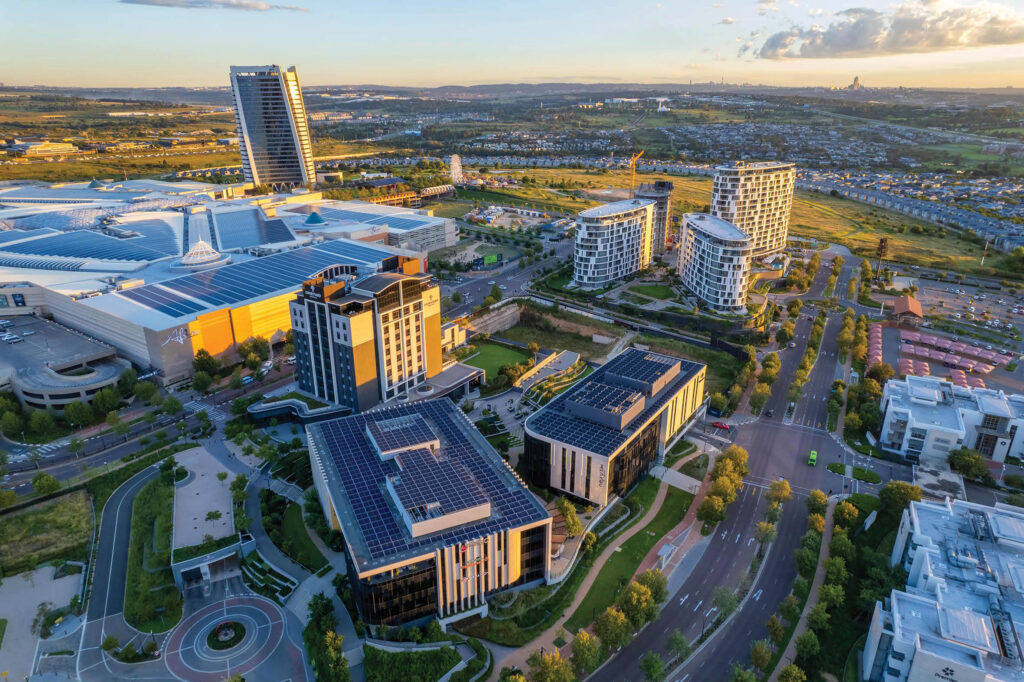
Although this is global first in terms of EDGE certification, it is not a first for Green Star. The Mall of Africa achieved a Green Star Existing Building Performance (EBP) rating in 2021, creating a strong foundation on which to build its sustainability journey. This time around, Attacq wanted to hone in on energy and water retrofits, making the EDGE tool a perfect fit. So how did the team do it – and can others follow suit?
WATER SAVINGS – 28%
While 28% in water savings may not seem like much at first glance, Cornelia Mey, EDGE auditor at Ecolution, is quick to point out that this is Attacq’s greatest feat in the certification process. Before Cape Town faced the threat of taps running dry in 2015, Mey says there wasn’t a great deal of attention paid to water consumption in buildings. Today, however, water saving is front and centre. “The team had to work really hard to make sure the existing systems could be upgraded to meet the requirements for a 20% savings above today’s baseline,” says Mey. “You have a nine-year-old building that not only had to be enhanced to reach today’s standards, but also had to exceed them by 28%.”
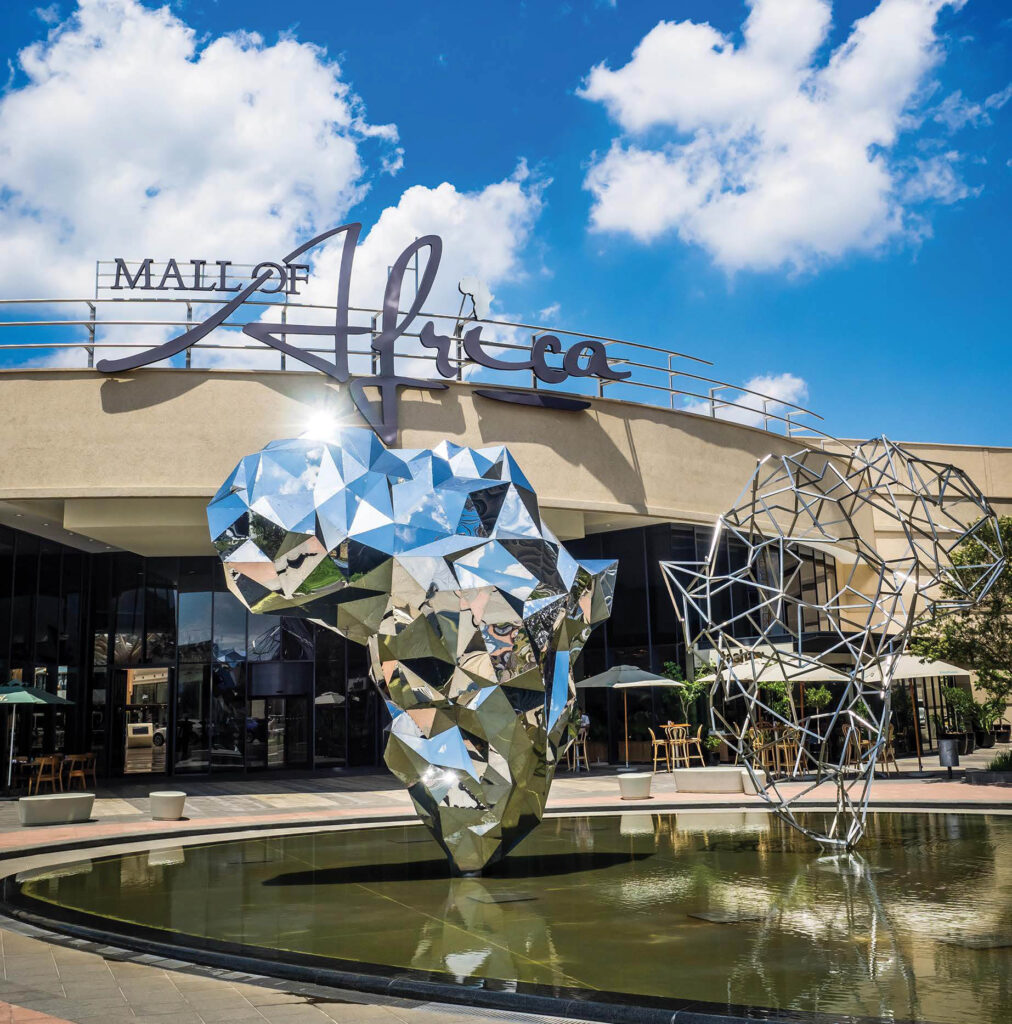
The mall adjusted the factory settings on its existing urinals, 231 toilets and the taps in 168 wash basins to reduce water consumption, without having to replace any hardware. The only additional hardware purchased were aerators for kitchen taps, and Mey adds that the operating team was heavily involved in these adjustments, while the mall’s daily activities continued. “Every single toilet and urinal had to have its system opened and flush mechanism adjusted from 6 litres per flush down to 4.5 litres per flush. They didn’t just pull everything out, throw them away, and replace them. They used what they already had – it’s a massive win in terms of making what you have more efficient.” Reducing the water consumption naturally elevated the efficiency of the mall’s rainwater harvesting system, which is used to flush toilets and contributes about 5% to the water savings.
Stephan Schutte, National Head of Operations at Attacq, says tenant engagement was crucial for behavioural change: “The operations team had the chance to work closely with tenants, helping them understand how their everyday behaviours directly impact resource use and their cost of occupancy. Technically, it was a difficult project to undertake – but the partnership and collaboration was incredible.” He says the Mall of Africa operations team played an important role in showing especially restaurants that using less water wouldn’t hamper any of their operations, and adds that buy-in from tenants is not as challenging as it used to be: “They understand that to be sustainable in the long run, we need to make certain changes. Big companies that are our anchor tenants make public (sustainability) commitments, so it’s easier to get those clients on board.”
ENERGY SAVINGS – 53%
Having one of the biggest rooftop solar PV arrays in the country made it quite easy for Mall of Africa to achieve the relevant energy savings requirements. At around 4.7MWac, this system was the biggest solar array in the country when it was built and contributes up to 30% of the development’s annual energy consumption.
According to Mey, the mall didn’t need to make any significant new improvements, but it’s clear that efficiency has always been top of mind.
“They’ve got a lot of LED lighting, but also many skylights,” says Mey. “You have natural light coming in all the way down to the bottom floor.” Adding to that, she says the role of insulation and operating schedules for heating, ventilation and air conditioning (HVAC) cannot be underestimated. “Operating schedules are not necessarily something that the EDGE app considers, but that is typically how a retail development like Mall of Africa would make sure that its efficiency is kept in check.”
That is one of Tessendorf’s tips to anyone hoping to reach similar certifications. She describes these schedules and the group’s real-time data monitoring system SUH (Smart Utility Hub), as an invaluable asset. “It’s a game changer. If you can understand your data, it’s easier to make decisions on where to spend the time, effort and capex. We immediately saw what the big consumers on water were, so we targeted those first. But if you don’t have that data, you don’t know what you don’t know.”
LESS EMBODIED CARBON IN MATERIALS – 100%
The EDGE certification tool encourages developments to utilise as little embodied carbon as possible. “If your building is more than five years old and you’re keeping your existing building, you get 100% score on your material,” says Mey. “Mall of Africa didn’t have to break anything down or build anything new. The mall’s initial design and materials were chosen to minimise the need for frequent replacements and maintenance.”
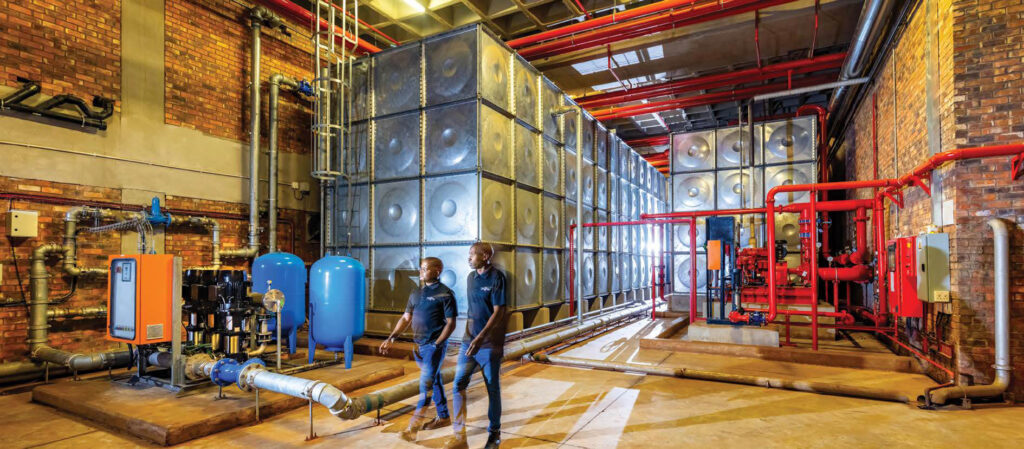
According to Mey, this is a strategic move by EDGE, as it enables existing buildings to focus more on energy and water savings. “There are a lot more existing buildings in the built environment than there are new buildings being erected. If we’re only trying to make new buildings more efficient, we’ll never reach our net zero targets or reduce energy consumption. We cannot ignore the percentage of stock (buildings) that are more than 10 years old.”
To fully reflect the magnitude of this project in one article is nearly impossible, but the conversations it’s sparked, from boardrooms to conference stages, speak volumes.
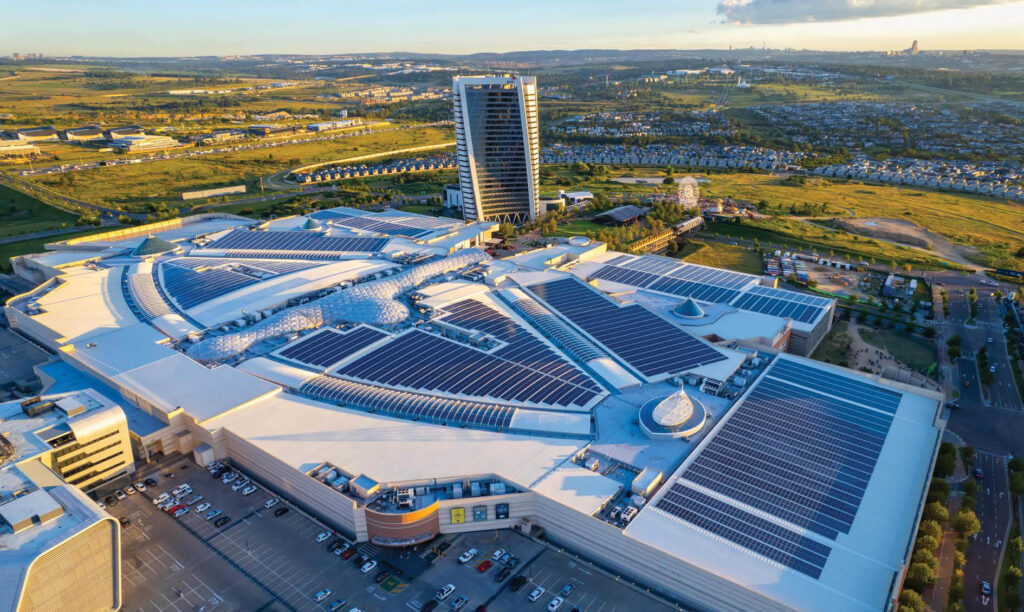
Nell emphasises that this is a big win for South Africa. “We’ve long been leaders in green office and commercial buildings, but this project proves we can push boundaries in other sectors too. From GBCSA’s perspective, we’re proud to have certified a project that demonstrates that sustainability can scale – even in existing, complex, high-traffic buildings. It shows that South Africa isn’t just keeping up: we’re helping to shape the global narrative on sustainable urban development.”
Theodore Roosevelt once said: “Do what you can, with what you have, where you are.” More than simply embodying this tenet, Mall of Africa’s commitment to energy efficiency, water conservation and reduced carbon emissions poses an excellent case study for large-scale retail sustainability retrofits.


