Latest Living Planet Report focuses on the science of hope
In spite of an average 73% decline in wildlife population sizes, scientists reveal grounds for hope in WWF’s latest Living Planet Report.
There has been a 73% decline globally in the average size of monitored wildlife populations over a 52-year period, according to the latest data from the Living Planet Index (LPI) released today.
Yet, while some regions are losing wildlife much faster than others, about half of the populations the global LPI tracks are stable or increasing. Examples of species recovery include green turtles, bluefin tuna and tigers – pointing the way to successful interventions that can reverse the trend of biodiversity loss.
The LPI is put together by the Zoological Society of London (ZSL) and released every two years. It draws on almost 35 803 population trends covering 5 790 monitored vertebrate species worldwide. The results are published in WWF’s Living Planet Report (LPR) which outlines what actions need to be taken for nature to recover.
This year’s report, titled “Science of Hope”, shows that the steepest declines in monitored wildlife populations were recorded in Latin America and the Caribbean (95%), Africa (80%) and Asia–Pacific (49%). North America registered an average decline of 28%, while Europe and Central Asia registered a decline of 23%.
Habitat loss and degradation is the most frequently reported threat affecting monitored wildlife populations, followed by overexploitation, climate change, pollution, invasive species and disease.
These threats are, in turn, driven by broader systemic failures across the food, energy and finance systems indicating that biodiversity loss cannot be reversed through conservation efforts alone. This LPR includes research by the University of Exeter showing that large and complex systems can change rapidly once they cross a threshold into a healthier state and the shift becomes self-reinforcing: faster, cheaper and harder to reverse.
- Energy: A positive tipping point has been passed in the energy sector and change is accelerating, with solar power now the cheapest source of new electricity generation in most countries. Despite this momentum, the energy transition is not yet happening fast enough, and progress varies significantly between countries and sectors.
- Food and agriculture: Positive change is underway and showing early signs of progressing toward a tipping point, with many people and organisations around the world working towards nature-positive production, promoting sustainable trade and consumption, encouraging healthy and sustainable diets, and reducing food loss and waste.
- Finance: The finance system is still in the early stages of building toward a tipping point, with the sector needing to work rapidly towards stopping the financing of harmful activities, valuing nature and climate as material risks, creating regulatory certainty, and closing an annual US$1.3 trillion biodiversity financing gap.
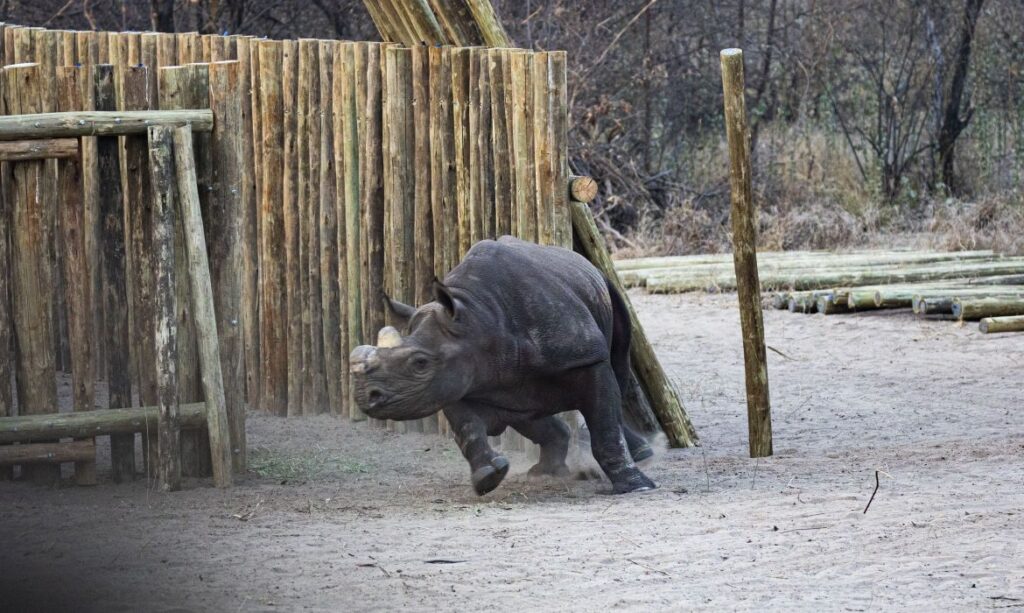
Dr Morné du Plessis, CEO, WWF South Africa, said: “The Living Planet Report is always a salutary reminder that it will take a mammoth effort on the part of all players to halt and reverse nature loss. This year’s report also highlights some successful case studies which illustrate how this can be done. In the South African context, we only need to look at the story of black rhino recovery, largely aided through initiatives such as WWF’s Black Rhino Range Expansion Project. Rather than feeling despair and despondency, we should redouble our efforts for people and nature.”
Daudi Sumba, Chief Conservation Officer, WWF International, said: “While the window for a different future is narrowing, it remains open. Transforming complex systems at the speed and scale required won’t be easy, but by triggering positive tipping points it can happen quicker than we might think. The sooner we act, the greater the benefits are for people and nature. We have the knowledge, the tools and the pathways – what matters now is our collective resolve to act together and meet the scale of the challenge to put nature and the climate on the path to recovery by 2030.”
Dr Andrew Terry, Chief Conservation Officer at ZSL, said: “Abundant wildlife populations, and the intricate web of interactions between them, underpin the healthy ecosystems that allow us all to thrive. There is no workaround for this; human wellbeing and economic security depend on us working with nature, rather than against it.
“For too long, nature has been undervalued, and the Living Planet Index shows us the consequences – but these declines are not inevitable, and change is possible. Nature can recover, and the stories within the Index are a powerful reminder of this.
“Our global teams have seen species and ecosystems rebound when threats are reduced and conservation action is sustained. The more people join us in taking decisive and rapid action to protect wildlife and ecosystems across the globe, the sooner we can turn knowledge into action and reach positive tipping points to secure a healthier, more resilient future.
Download the report here.


