It’s time to see good in wood
“Mention timber buildings, and most people conjure up images of wendy houses or log cabins, or they are worried about deforestation,” remarks Roy Southey, executive director of Sawmilling South Africa (SSA).
SSA, along with the greater forest product value chain, has been striving to dispel these misperceptions by showcasing timber’s potential as a primary construction material, highlighting its sustainability credentials, and emphasizing the remarkable evolution in engineered wood and timber-based architecture.
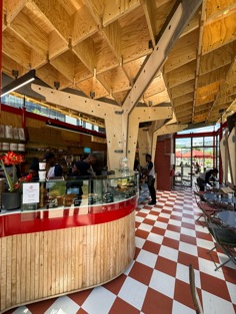
The procurement of renewable, sustainably produced, and certified wood by the construction sector holds immense potential for decarbonization and climate change mitigation. South Africa boasts 1.2 million hectares of farmed trees that are grown for sawn timber, poles, pulp, paper, and packaging.
Approximately one tonne of carbon is stored by one cubic metre of wood throughout its lifetime. The carbon-storage potential of a mass timber building is thus significant.
As trees grow, they absorb carbon dioxide and store it as carbon in leaves, trunks, roots, and soil. When a harvested tree is turned into a wood-based product, the carbon remains locked up in those products. Replanting the land with new trees perpetuates the carbon cycle.
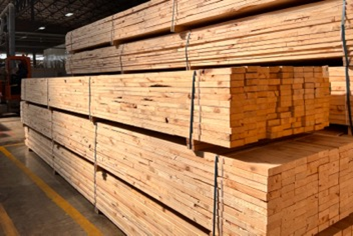
Timber offers strength, durability, and a range of versatile engineering technologies such as Glued Laminated Timber and Cross Laminated Timber. Modern wood-based construction materials are safe if properly designed, treated, and used with structures prefabricated off-site, reducing construction times and associated costs.
Further to this, people have an innate tendency to seek connections with nature. Just as being in a forest can evoke positive feelings, incorporating timber into workplace design can significantly enhance wellbeing, job satisfaction, and productivity. Countless local and international studies demonstrate that timber in the built environment yields lower environmental impacts in terms of energy use, greenhouse gas emissions, air pollution, water pollution, and solid waste production compared to conventional systems. It’s no wonder that architects are beginning to recognize the benefits of wood.


