Conventional wisdom
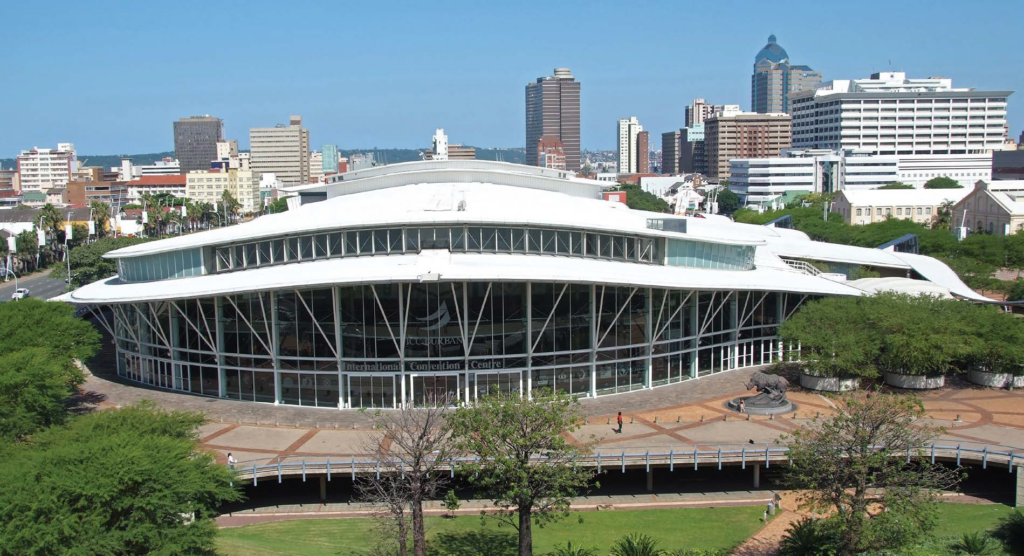
A 50 000m2 precinct in the city centre, Durban’s International Convention Centre (ICC) comprises three distinct, yet interconnected elements: the Durban ICC (the Inkosi Albert Luthuli International Convention Centre), Durban Exhibition Centre and the ICC Arena. The Durban ICC falls entirely under the ambit of Durban city’s Ethekwini Municipality as a state-owned enterprise and, at the time of its construction between 1994 and 1997, was one of the single largest investments made by the City of Durban. It has garnered numerous prestigious international awards acknowledging its status as a world-class exhibition, convention and entertainment centre.
This vast ICC precinct sits on Bram Fischer Road at the site of Durban’s old Central Prison. A memorial wall from the prison, initially depicting the Universal Declaration of Human Rights and later South Africa’s Bill of Rights, was preserved and integrated into the site, and is flanked by two watchtowers from the original prison.
Strong green credentials
In recent years, the ICC has focused strongly on strengthening the precinct’s green credentials, and recently obtained a 4-Star Green Star Existing Building Performance (EBP) V1 rating from Green Building Council South Africa (GBCSA). Siphiwe Khuzwayo is the Facilities & Infrastructure Support Executive at the ICC, and for him, pursuing sustainability and green star credentials is considered a journey, rather than a destination: “I don’t consider Green Star certification as an event: it’s a process we have initiated and there is no stopping it – or us – now,” he says. At nearly three decades old, upgrades, repurposing and maintenance here is a constant work in progress. The 4-Star Green Star certification might be a recent achievement, but the management’s strong focus has been – for many years – on always choosing sustainable options. Khuzwayo says, “A number of features did contribute to this current certification, but others weren’t complete and will be submitted for the next application. Over the past few years, we’ve installed motion sensors in the bathrooms, so when they’re vacant, we save electricity and money. Our taps have auto flush systems to reduce water usage, and our escalator is activated only when somebody steps on to it, and that reduces power consumption. Our air-conditioning systems use ice storage technology – ice builds up overnight and cools the building during the day.”
Khuzwayo talks through the motivation behind the quest for a Green Star rating: “As an international convention facility, we host many local, national and international events, and green certification is increasingly one of the key factors for decision-makers in bringing events here. It’s not, of course, the only decision or criterion, but the mere existence of our green certification means we are seen to take environmental management seriously. The Durban ICC does have the ISO14001 certification – the international standard for environmental management systems – but we wanted to take it one step further. Clearly, if an international green building council wanted to host an event here, they would undoubtedly want to associate themselves with institutions that share the same values.” He adds, “Likewise, if we are understood to be serious about being environmentally responsible, we are seen to be responsible about a host of other things too. There are many responsibilities and actions that accompany Green Star certification, so, as much as it’s a strategic decision for the Durban ICC to go green, it goes beyond that. We are committed to reducing our carbon footprint.”
A benchmark for best practice
Mellissa Titus of Independent Quality Assurers (Pty) Ltd was the Accredited Professional and sustainable building consultant on the project. The ICC scored 48 points to achieve the 4-Star Green Star EBP rating, which states the building is operating efficiently and sustainably, setting a benchmark for “best practice” in the South African market for existing structures. For the purposes of the certification, the Durban ICC precinct was divided into two entities, the Convention Centre and the Arena, and the Exhibition Centre, making it a Multiple Building certification. Titus says she always describes any first existing building certification “as a snapshot of where the building is at, in terms of how sustainably it’s operating”. The focus of this certification is on aligning the building’s operations with best practices in sustainability. “Bottom line: we evaluate the building’s performance based on key sustainability metrics, including energy and water efficiency, waste management, indoor environmental quality and adherence to sustainable management practices. The Durban ICC is a pioneer for convention centres in South Africa within Green Star Existing Building Performance certification.”
The highest points under three of the nine tools were attributed to Land Use and Ecology, Indoor Environmental Quality (75%) and Transport: “The ICC scored 100% of submitted points for Land Use and Ecology, which covers their standard operating procedures (SOPs) for landscape management; hard surfaces and building exterior management; pest control management; and community facility on site. For the latter point, the project earned recognition for supporting community services through an onsite police station, utilising complimentary space within the Durban Exhibition Centre.
For the Transportation category of the rating, Titus conducted a survey among building occupants and visitors to assess how they travel to and from the facility. The aim is to promote sustainable travel options – using alternative forms of transportation other than single-occupancy vehicles. The ICC has bicycle storage racks, lockers and showers on site to encourage cycling as a means of transportation and to promote sustainable travel choices among staff members and visitors.
“Following the initial certification,” explains Titus, “we conduct a gap analysis to identify areas for improvement. We then determine which measures the client is willing and able to implement to enhance the facility’s sustainability performance, considering budget constraints. During the initial evaluation, several sustainability initiatives within the precinct were still in progress and therefore did not fully contribute to the rating. However, these measures will support the subsequent certification of the facility. Discussions with the ICC are already underway regarding further accreditation, with their team fully dedicated to securing 5-Star and subsequently 6-Star Green Star certification for the facility.”
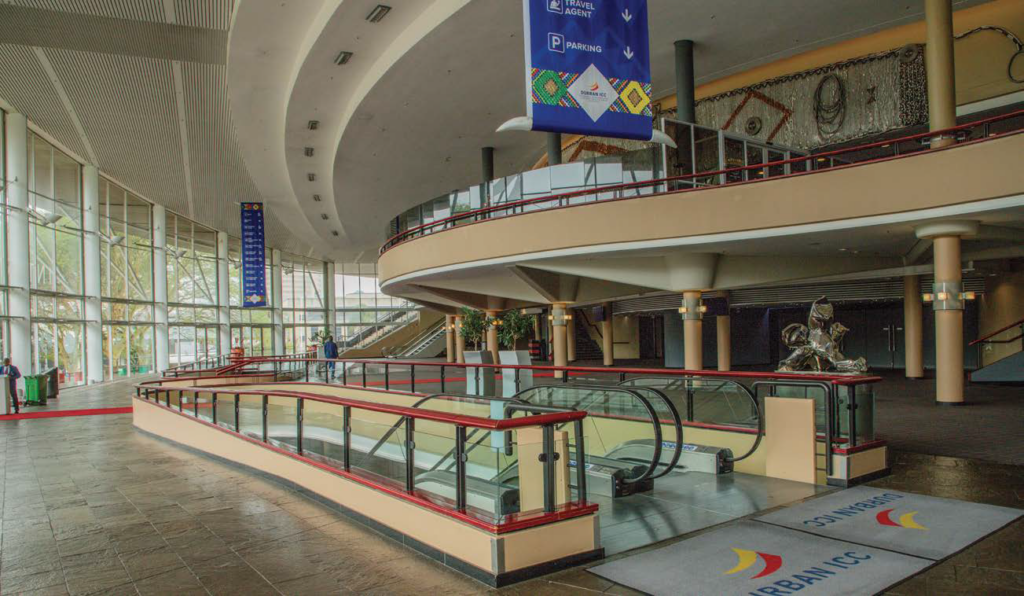
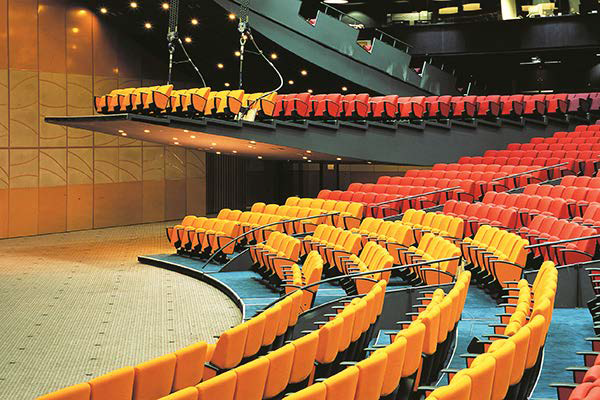
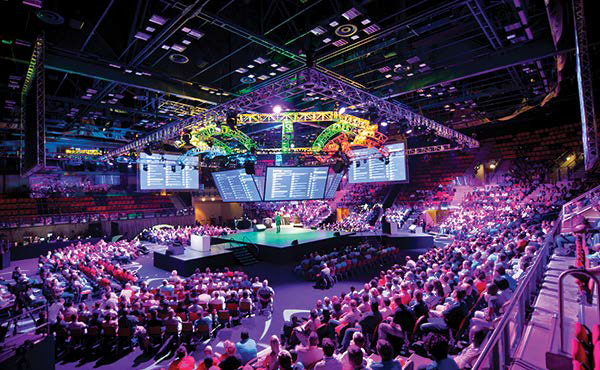
All refurbishments undertaken at the ICC were conducted with sustainability front of mind, affirms Khuzwayo: “As a state-owned enterprise, we operate under the strict financial management of eThekwini Municipality, so budget always plays a role. As an example, we are currently in the process of replacing our air-conditioning chiller units with an investment of R50 million. Our starting point is always green – the units’ sustainability credentials, the minimisation of electricity consumption and the lowering of costs. But we are compelled to balance green with budget.”
Titus says that working towards the certification, all Green Star-compliant policies and standard operating procedures were implemented in the process: “The client has committed to have the building operate more sustainably, thus all Green Star-compliant SOPs were adopted within the assessment period. A green cleaning SOP was adopted to employ more environmentally friendly chemicals and cleaning practices at the facility – and likewise, a green procurement SOP for all future refurbishments, which means all materials from paint to wood will be scrutinised for their sustainability features. An easy-to-follow Building User Guide was prepared to ensure occupants can fully leverage the building’s green features. A detailed Building Operations Manual was prepared to assist the management team in overseeing operations and optimising resource efficiency.”
Shared duty, shared impact
For Khuzwayo, an important part of their sustainability journey is the messaging: “There were many opportunity points en route to the 4-Star EBP certification, and one of the points on which we wanted to capitalise was staff, client and visitor awareness. We have large screens at the top of our escalators, and the intention is to use them for messaging purposes. We want to project the weekly/monthly water consumption, and likewise for electricity and waste.
“In addition, we need to provide information to our clients, such as waste disposal protocols. Does everybody know where to put their plastic? We need to ensure everybody knows how to contribute to the Durban ICC sustainability initiatives.” Khuzwayo talks about their kitchens: “Food production is a massive undertaking here, and it uses a great deal of energy. Our staff now have an understanding of high and low tariff energy times, so as far as possible, mass production is done in off-peak times. It’s an electricity and cost saving. Electricity consumption at the ICC is clearly different from a home environment, but still, the learnings are there for staff to take home.
“We have a lot of opportunities to explore yet, but we have opened the minds of everybody who works here and who visits here. The pursuance of sustainability is not the role of one person or department: it’s everybody’s responsibility – staff and clients.”


